


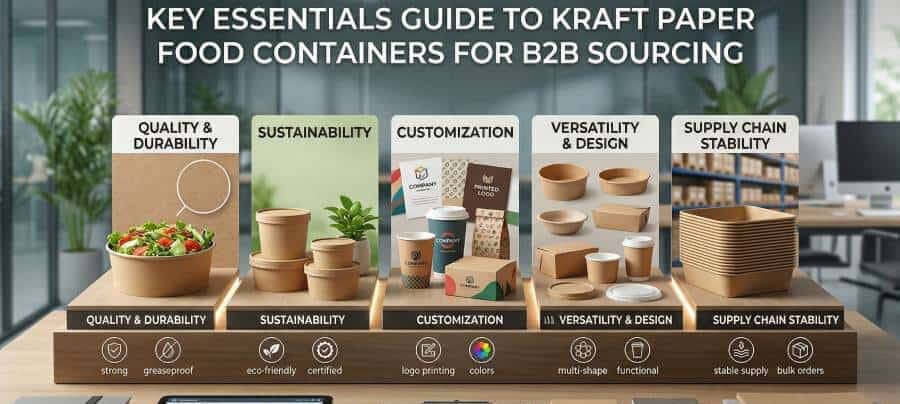
In the fast-evolving world of food service, packaging is no longer just a vessel—it is a strategic statement of brand values and operational resilience. As we move through 2026, global plastic bans have shifted from trend to mandate. From the EU’s Single-Use Plastics (SUP) Directive and its 2025 packaging regulations to the localized yet stringent bans in California and New York, the regulatory landscape is demanding a circular economy.
Amidst these tightening constraints, kraft paper food containers have emerged as the gold standard for B2B buyers seeking a balance between sustainability and high performance. These solutions are not just compliant; they offer superior durability with high tear resistance, an eco-friendly footprint that resonates with modern consumers, and a premium, rustic aesthetic that enhances brand loyalty.
Whether you are a local café owner or a procurement manager for a global food chain, understanding the nuances of kraft paper packaging is vital to the future of your brand. As market demand for sustainable packaging continues to rise, kraft food containers do more than just meet environmental requirements—they also enhance brand image and operational efficiency. By selecting the right packaging materials and suppliers, you can help your business stand out in today’s highly competitive market.
1. What are Kraft Food Containers?
The term Kraft originates from the German word for “strength,” which perfectly describes the chemical pulping process that transforms wood into long, resilient cellulose fibers. This unique sulfate (Kraft) pulping method preserves the natural integrity of the wood, giving Kraft meal boxes their signature natural brown aesthetic and the unparalleled durability required by the modern foodservice industry.
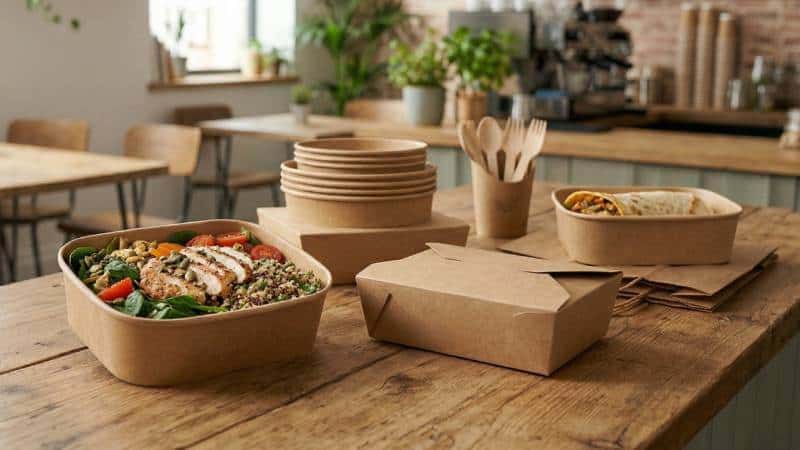
The Crucial Difference: Virgin Pulp vs. Recycled Fibers
Understanding the distinction between these two materials is vital for ensuring both food safety and structural performance:
- Virgin Kraft Pulp: Made directly from wood fibers, it offers the highest tensile strength. Because it is free from contaminants found in recycled waste, it is the industry standard for direct food contact, strictly complying with international safety standards such as the U.S. FDA and the EU’s LFGB.
- Recycled Kraft: An eco-friendly alternative made from post-consumer waste. While ideal for secondary packaging like carrier bags, high-performance food containers often utilize a multi-layer structure—using virgin pulp for the interior to ensure food safety, while incorporating recycled fibers on the exterior to balance environmental benefits.
Why Does Kraft Offer Superior Functionality?
Compared to traditional papermaking, the Kraft process retains more lignin-free cellulose, providing three key physical advantages:
- Superior Tear Resistance: Essential for holding heavy meals or withstanding the pressure of sharp utensils without puncturing.
- Thermal Stability: Unlike many plastics, Kraft paper maintains its rigid shape without softening, even when exposed to high-temperature steam from hot soups or fried foods.
- High Grammage (GSM) Standards: Professional-grade containers typically range between 250 GSM and 350 GSM. This high density ensures the structural stability of the container base during long-distance delivery, preventing bottom collapse.
Understanding the manufacturing technology behind Kraft paper is only the first step. For businesses, transitioning to this material is not just about structural reliability—it is a precise strategic move to align with global regulations and evolving consumer expectations.
2. Why Your Business Should Transition to Kraft Packaging
In today’s competitive landscape, switching to kraft packaging is no longer just a trend—it is a calculated business decision. As consumer demand for sustainability reaches an all-time high, kraft paper food containers provide a dual advantage: meeting rigorous global regulations while significantly strengthening brand equity.

Environmental Impact and Regulatory Compliance
- Reduced Carbon Footprint: Compared to plastic manufacturing, the production of kraft paper is generally more energy-efficient and involves fewer harsh chemicals. This allows businesses to align with global decarbonization goals effectively.
- Mitigating Legal and Financial Risks: With 2026 marking a critical turning point for single-use plastic (SUP) bans, kraft paper offers a high-quality, compliant alternative. This transition helps businesses avoid “green taxes” and legal penalties associated with non-sustainable materials in many regions.
- Contribution to a Circular Economy: Unlike multi-layer composite plastics, kraft paper is highly recyclable. When paired with bio-based coatings, it can fully biodegrade within weeks. This ensures your packaging stays out of landfills, fulfilling Corporate Social Responsibility (CSR) requirements.
Brand Elevation and Natural Aesthetics
In a digital-first market, the unboxing experience is a vital stage of the customer journey, making packaging your brand’s most important physical touchpoint.
- The “Eco-Chic” Appeal: The natural brown tones and organic texture of kraft paper communicate messages of freshness and premium quality. it signals to customers that your brand is committed to both excellence and environmental stewardship.
- Visual Marketing Synergy: The neutral, earthy backdrop of kraft paper makes vibrant ingredients—such as fresh salads or artisan burgers—visually pop, increasing the perceived value of the meal.
- High Customizability: Kraft paper supports various food-safe printing techniques, allowing brands to showcase their identity through minimalist or bold designs without compromising the material’s natural feel.
Long-Term Cost Efficiency and ROI
While the initial unit cost of kraft food containers may be slightly higher than low-end plastics, the long-term Return on Investment (ROI) is superior:
- Consumer Willingness to Pay: Research indicates that up to 70% of consumers are willing to pay a premium for products delivered in sustainable packaging, allowing businesses to offset higher material costs.
- Inventory Simplification: The versatile nature of high-quality kraft boxes allows them to replace multiple plastic SKU types. This streamlines supply chain management and reduces warehouse overhead.
- Durability and Reduced Loss: Thanks to its superior tensile strength and tear resistance, kraft paper provides robust protection during transit, minimizing financial losses associated with damaged goods or leaked deliveries.
The transition to kraft paper packaging is a forward-thinking move that satisfies environmental mandates, enhances market competitiveness, and secures a sustainable foundation for long-term growth. However, achieving these benefits requires more than just picking any brown box.
To ensure your packaging performs under real-world conditions—such as high-heat transport or oily food containment—you must understand the engineering behind the paper. In the next section, we will dive into the technical specifications that separate professional-grade containers from the rest.
3. Beyond the Box: Identifying Key Technical Features
When selecting Kraft food packaging, a deep dive into its technical specifications is essential for ensuring food freshness and customer satisfaction. Here are the four critical technical dimensions that B2B buyers must evaluate:

Oil and Water Resistance: Understanding Coating Technologies
Kraft paper is not inherently greaseproof or waterproof; it requires specific coating treatments to achieve its protective properties:
- Polyethylene (PE) Coating: The most common market choice, offering excellent moisture and oil resistance. It effectively prevents the box from becoming soggy when holding hot, humid food.
- Polylactic Acid (PLA) Coating: A biodegradable material derived from plant sources like corn. It is ideal for brands committed to a “100% plastic-free” mission. While it carries a slightly higher cost, it offers a strong competitive edge in sustainability.
- Aqueous Coating: The latest industry innovation using water-based dispersions to create a protective barrier. Its primary advantage is that it can be processed through standard paper recycling systems without special treatment, making it an ideal choice for the circular economy.
Heat Resistance and Microwave Safety
The takeout and delivery industry must account for the consumer’s need to reheat meals. High-quality Kraft food containers can typically withstand temperatures between 100°C and 120°C.
Pro Tip: Always verify that products do not contain metallic foil linings and request explicit “Microwave Safe” certification from suppliers to ensure end-user safety.
Structural Integrity: The Importance of GSM (Grammage)
The structural strength of a box depends directly on its grammage. For heavier meals like pasta, risotto, or stews, a specification of 300 GSM or higher is recommended. High grammage not only prevents the base from bowing or leaking under pressure but also conveys a “sturdy, premium” tactile feel for the brand.
Sealability and Lid Compatibility
Perfect packaging requires a secure lid fit. Superior Kraft containers feature a precision “rolled rim” design. Whether paired with a transparent PET lid or a high-heat resistant PP lid, this ensures zero-leak performance during the rigors of delivery.
Mastering these technical indicators ensures your packaging is functionally flawless. However, selecting the right “container shape” tailored to specific cuisines is equally vital for a complete solution.
4. Common Kraft Food Containers by Cuisine Type
In the B2B sector, food packaging must be selected based on specific culinary requirements. The right structural design does more than just preserve flavor; it significantly enhances delivery security and reinforces brand premiumness.
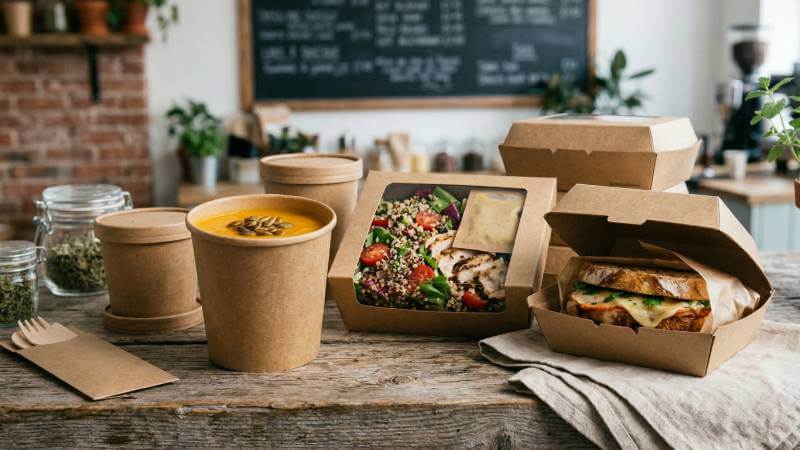
Round Bowls: The Gold Standard for Salads, Poke, and Light Fare
For brands pursuing a healthy and fresh image, the round Kraft paper bowl is the industry benchmark.
- Visual Aesthetics: The wide-rim design maximizes the display of vibrant ingredients, boosting consumer appetite and perceived product value.
- Seepage-Proof Engineering: featuring a precision rolled-edge design, it ensures a tight seal between the bowl and either a PET transparent lid or an eco-friendly paper lid, preventing rich sauces from spilling.
Square and Rectangular Containers: Optimized for Entrées, Bento, and Logistics
Rectangular “folding boxes” or “tab-lock boxes” are the workhorses for high-volume restaurants and franchises.
- Structural Stability: The rectangular format is ideal for pasta, rice dishes, or stir-fries. Its flat base offers excellent stacking stability, which is a major advantage for high-capacity delivery runs.
- Storage Efficiency: Many rectangular containers feature a nestable design, saving significant storage space in space-constrained commercial kitchens.
Specialty Containers: Targeted Designs for Soups, Fried Foods, and Bakery
- Double-Wall Kraft Soup Cups: For hot soups and porridges, the double-wall construction provides superior thermal insulation and structural integrity, ensuring the cup won’t soften or leak under high heat.
- Ventilated Fried Food Boxes: Specifically designed for fried chicken and fries, these boxes feature micro-ventilation holes to allow steam to escape, preventing food from becoming soggy and losing its crunch.
- Exquisite Bakery and Dessert Boxes: Smaller-gauge Kraft boxes with viewing windows balance an eco-friendly texture with visual display—the top choice for artisanal bakers.
- Sushi Bowls: Specially engineered with greaseproof and waterproof properties, these maintain the freshness of the sushi while providing a premium aesthetic suitable for high-end dining.
- Dessert Containers: Often designed with a compact and charming silhouette, these are perfect for a variety of sweets and are crafted to capture the customer’s attention.
Selecting the appropriate Kraft food container not only preserves food quality and appearance but also elevates your brand identity. Choosing containers tailored to specific cuisines will help you exceed customer expectations and stand out in a competitive market. Once specifications and styles are finalized, the next challenge for any enterprise is selecting a partner from a sea of suppliers who can offer stable production capacity and recognized international certifications.
5. B2B Sourcing: How to Evaluate a Reliable Kraft Container Manufacturer
In the global supply chain, packaging stability directly impacts operational margins. For B2B buyers, selecting a manufacturer shouldn’t just be about the lowest price; it must be built on three pillars: compliance, quality, and supply chain resilience.
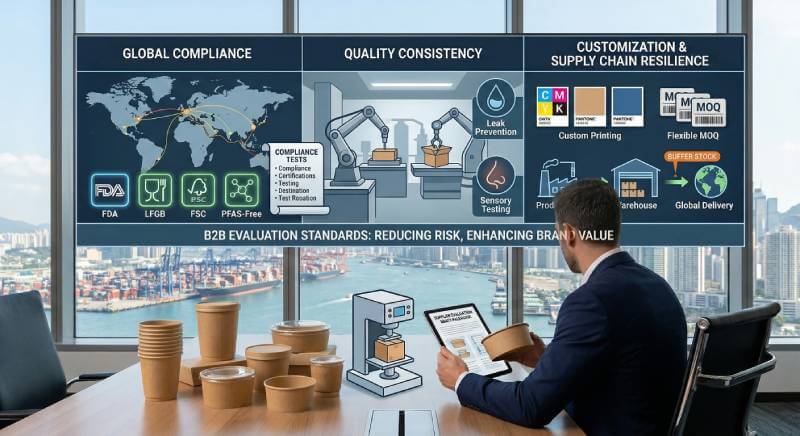
Global Compliance: The Non-Negotiable Regulatory Baseline
If your business involves international operations, your supplier must hold globally recognized certifications to mitigate legal risks:
- Food Safety Certifications (FDA/LFGB): Ensures that both the virgin pulp and coatings are free from harmful chemicals and meet U.S. and EU standards for direct food contact.
- FSC Certification: Proves that materials are sourced from responsibly managed forests—a core metric for achieving ESG goals and Corporate Social Responsibility.
- PFAS-Free Testing: As of 2026, bans on “forever chemicals” (PFAS) have come into full effect globally. Suppliers must provide third-party non-toxic test reports to ensure smooth customs clearance.
Quality Consistency and Internal Laboratory Testing
Top-tier manufacturers utilize standardized testing to ensure batch-to-batch consistency:
- Leakage and Structural Testing: Verifies that the containers maintain structural integrity under high heat, humidity, or pressure, such as during extended delivery times.
- Sensory Testing: Ensures that the Kraft paper and printing inks are odorless and do not taint the original flavor of the food—a detail highly valued by premium dining brands.
Customization Flexibility and Brand Premiumization
Packaging is your brand’s most visible mobile billboard. Leading suppliers should offer solutions that go beyond the product itself:
- Food-Grade Ink Printing: High-fidelity CMYK or Pantone color matching using eco-friendly, vegetable-based food-grade inks.
- Flexible Specification Development: The ability to adjust GSM thickness or design specialized ventilation structures based on unique menu items, such as high-grease fried foods or ultra-high-temperature soups.
- MOQ (Minimum Order Quantity) Agility: Offering flexible order volumes for seasonal promotions helps chains reduce inventory pressure.
Supply Chain Stability
A single day of packaging shortages can halt operations. Evaluating a manufacturer’s logistical prowess is critical:
- Scalable Production Capacity: Ensure the factory has the production scheduling capability to handle peak seasons or promotional surges.
- Logistics and Warehousing Expertise: Provides transparent lead times and has experience navigating international shipping challenges, including professional moisture-proof pallet packaging.
- Safety Stock Programs: For long-term partners, check if the supplier offers inventory management or maintains a buffer stock.
Selecting a manufacturer that possesses the necessary certifications, offers bespoke solutions, and maintains a stable supply chain will help your business stand out. This approach not only minimizes risk but also elevates brand image and customer satisfaction.
As businesses transition to Kraft food packaging, procurement teams often have common questions. Below are the answers to these frequently asked questions:
6. Frequently Asked Questions (FAQ)
Q1: How long can hot or greasy food stay in the box before it gets soggy?
High-quality Kraft containers with superior grease-resistance ratings typically maintain their structural integrity for 30 to 60 minutes, depending on the food’s steam and moisture content. For high-humidity dishes like pasta, we suggest selecting a high-grammage specification (300 GSM or higher) to prevent softening.
Q2: Can these containers be used for long-term frozen food storage?
Standard Kraft boxes are not recommended for long-term freezing, as the paper absorbs condensation during the thawing process, leading to deformation. For ice cream or pre-packaged frozen meals, you should opt for specialized freezer-grade Kraft packaging that features a double-sided moisture barrier.
Q3: Is the printing ink on Kraft paper food-safe?
Yes, provided the manufacturer uses food-grade, eco-friendly plant-based inks, such as soy-based inks. Professional B2B suppliers ensure that printing is applied only to the exterior and that the ink does not migrate through the fibers to contaminate the food inside.
Q4: Are Kraft meal boxes truly compostable?
This depends entirely on the lining. Containers with bio-based (PLA) or Aqueous (water-based) coatings are typically compostable in industrial facilities. However, traditional PE-lined containers are designed for recycling but are not compostable. We recommend verifying coating specifications with your supplier to ensure they align with your waste management goals.
Q5: Can Kraft meal boxes be placed directly in the microwave?
Most kraft paper boxes are microwave-safe (up to approximately 100°C) as long as they do not contain metal foil linings. However, it is recommended to limit microwave time to 2-3 minutes to prevent the structure of the box from softening due to prolonged heat exposure. Ideally, transferring food to a microwave-safe, high-temperature resistant container for heating is the best practice to eliminate all food safety concerns.
Ultimately, choosing Kraft food containers is a savvy business decision that does more than just elevate your brand—it builds lasting customer loyalty. By prioritizing premium materials, functional design, and certified manufacturers, your business will stay ahead in an evolving market while delivering a superior experience to your customers.
If you are ready to level up your packaging strategy, explore our catalog of Kraft food container solutions or request a wholesale quote today to fuel your business growth.