


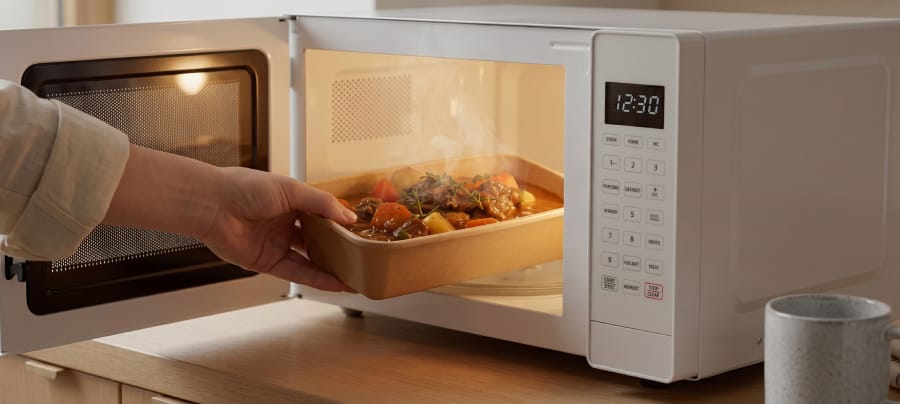
The Short Answer: plain paper products are generally not designed for microwave use. They dry out rapidly, can scorch, and may ignite if they contain any metallic elements. The exception is food-grade paper packaging that’s been specifically engineered and labeled as microwave-safe. This applies whether you’re asking about printer paper, lunch bags, or takeout boxes.
When you receive a takeout order, start by checking the container type:
- Bento boxes and takeout meal containers: Check the bottom for a Microwave Safe label or PP marking. Only microwave if clearly labeled. Otherwise, transfer to a different container.
- Paper bowls and paper plates: Most use PE laminate. Transfer food to a ceramic bowl before heating.
- Breakfast and deli containers: Primarily PE-laminated. Not recommended for direct microwave use.
- Pizza boxes: The paperboard itself is heat-tolerant, but monitor closely after one minute of heating, as food grease can cause the box to soften.
Still unsure? Run a fingernail lightly across the interior surface. A smooth, plastic-like feel typically indicates PE laminate. Do not microwave. A rough, paper-like texture is more likely a PP coating, but always check the label.
Takeout has become a regular part of daily life. As schedules get busier and meal timing gets tighter, convenience drives more decisions, which is why disposable paper containers have become so widely used. They are lightweight, practical, and easy to handle.
Here is the problem: not every kraft paper takeout container is safe for high heat.
Some containers that appear to be plain paper actually contain hidden coatings or laminate layers that react poorly under microwave heat. Knowing what your container is made of before reheating your meal is worth a quick check.
This guide covers which paper takeout containers are microwave-safe, how to identify the right products, and the role of sustainable kraft paper packaging in eco-friendly foodservice.
A Closer Look at Paper Takeout Containers
Over the past decade, food packaging has changed considerably. Plastic and EPS foam once dominated the market, but growing consumer concerns over health, pollution, and microplastics have pushed operators toward more sustainable options. Paper-based packaging, kraft paper containers in particular, has gained ground quickly.
What Are Kraft Paper Containers
Kraft paper containers are made from natural, unbleached wood pulp. They are durable, renewable, and biodegradable, and are generally recyclable, consistent with today’s sustainability standards. You may have seen these sturdy brown containers used for noodles, rice bowls, and salads.
EasyPack 6-inch 24oz square kraft paper meal box, for example, keeps food fresh and secure. Its coating blocks leaks and resists moisture, and the box can go directly into the paper recycling stream.
How Kraft Paper Differs from Plastic and Foam Containers
Plastic materials such as PET and PS are generally less expensive, but they perform poorly under heat. PET containers can warp or leach chemicals when microwaved, and EPS foam performs even worse, melting at high temperatures and releasing harmful substances.
Kraft paper containers are a safer option. Made from renewable materials, they do not leach toxins during heating when labeled Microwave Safe.
This is why more restaurants and cafes are switching from plastic and foam to eco-friendly disposable packaging.
Can Paper Takeout Containers Be Microwaved?
A quick note on terminology: when people search “can you microwave paper” or ask “is paper microwave safe,” they often mean anything made of paper — from printer paper to lunch bags to takeout boxes. The short answer is that plain paper products are generally not designed for microwave use. Plain paper dries out rapidly, can scorch, and may ignite if it contains any metallic elements. The exception is food-grade paper packaging that has been specifically engineered and labeled as microwave-safe.
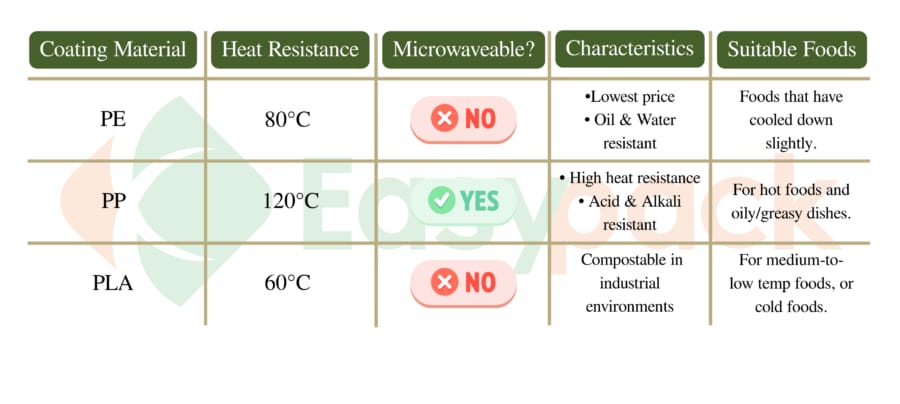
For paper takeout containers and paper lunch boxes specifically, whether they are safe to microwave depends entirely on the inner coating material, not the paper itself. The following covers common paper container materials and their heating guidelines. Check it against the container you have on hand:
| Container Type | Common Interior Coating | Microwave Safe | Recommended Maximum Heating Time |
|---|---|---|---|
| Kraft paper takeout container (labeled Microwave Safe) | PP coating | Yes | Under 3 minutes |
| Kraft paper takeout container (no label) | PE laminate or unknown | Not recommended | N/A |
| Bento meal box | PP or CPET coating | Check label | 2–3 minutes |
| Takeout paper bowl | PE laminate (most) | Not recommended | N/A |
| Paper plate | Uncoated or wax coating | Not recommended | N/A |
| Pizza box | Uncoated | Short duration only | Under 1 minute |
| Breakfast and deli containers | PE laminate (most) | Not recommended | N/A |
| Paper bag (takeout / lunch bag) | Uncoated or may contain metal wire | Not recommended | — |
| Styrofoam container (EPS) | Uncoated | Never | — |
| Paper cup | PE wax lining | Not recommended | — |
| Instant noodle paper bowl | PE coating | Not recommended | — |
| Plastic bowl (PP) | — | Check bottom label | Up to 2 minutes |
| Cardboard (corrugated) | Uncoated | Low heat, short time only | Under 30 seconds, monitor throughout |
There is one rule: only microwave if the container is labeled. If there is no label, transfer to a different container.
Not all paper containers are microwave-safe. Safety depends on the interior coating material.
Some containers have a thin plastic or wax lining on the interior. These materials do not respond well to heat. A safe container and an unsafe one differ entirely in the coating used.
Microwave-Safe vs. Non-Microwave-Safe Paper Containers
Kraft paper takeout containers with PP or CPET interior coatings are generally safe for microwave use. These coatings resist grease and moisture and do not release harmful compounds during heating.
Containers with plastic coatings such as PE or PLA, or wax coatings, should not be microwaved. These materials can soften, melt, or emit odors at temperatures above 100°C.
PE laminate (polyethylene coating) deserves a closer look. PE has a melting point of approximately 120°C to 130°C, and when microwaving fatty foods, localized temperatures can easily exceed that range. In rare cases, a softened coating may migrate into the food.
PE laminate is extremely common. Convenience store hot food containers, breakfast shop takeout boxes, and many fried food bags are likely lined with this material. Identifying it is simple: run a fingernail lightly across the interior surface. A smooth, distinctly plastic feel typically indicates a PE coating. PP coatings, by comparison, have a rougher texture and usually carry a PP marking or microwave-safe symbol on the bottom.
When the material cannot be determined, the safest option is to transfer food to a ceramic or glass container before heating.
The simplest rule: check for a Microwave Safe label or symbol. If none is visible, do not risk it.
Whether it is called a paper lunch box, a takeout box, a food carton, or a to-go container, the rule is the same: check the coating type and look for a Microwave Safe label before reheating.
EasyPack kraft paper packaging line includes multiple microwave-safe kraft paper containers, all tested for heat performance, suited for takeout orders and meal prep services.
Can You Microwave Cardboard?
“Cardboard” is a term many people use interchangeably with paper takeout boxes — but it covers a wide range of materials, and not all of them behave the same way in the microwave.
Food-grade kraft paperboard containers (the kind used for takeout boxes and food cartons) can be microwave-safe when they carry a PP (polypropylene) coating and a clear “Microwave Safe” label. Without that label, do not assume it is safe.
Corrugated cardboard (the kind used for pizza boxes and shipping cartons) is a different story. Plain corrugated cardboard without metallic ink or staples can tolerate brief, low-heat microwaving, but it is not designed for it. Uneven thickness causes hot spots, and any grease or moisture in the box can become a fire hazard with extended heating. Keep it under 60 seconds if necessary, and never leave it unattended.
As a general rule: if the packaging does not say “Microwave Safe,” transfer the food to a ceramic or glass container before reheating.
Styrofoam, Plastic, and Paper Bags: Containers You Should Never Microwave
Paper takeout boxes are not the only containers people reach for when reheating food. Here is what you need to know about other common packaging types — some of which are far more dangerous in the microwave than you might expect.
Can You Microwave Styrofoam (EPS) Containers?
No — and the risk is serious. Styrofoam (expanded polystyrene, EPS) releases styrene when exposed to heat, a chemical compound classified as a possible carcinogen by multiple international health agencies. The hotter the container gets, the more it leaches into food. Even if the food itself is not piping hot, the steam generated inside a microwave is enough to soften the foam and cause it to warp and break down.
This is one of the primary reasons many countries have moved to restrict or ban EPS food containers entirely.
What to do instead: Transfer food from a styrofoam container to a ceramic or glass bowl before microwaving.
Can You Microwave Plastic Takeout Containers?
It depends on the plastic type. PP (polypropylene, recycling symbol ♵5) containers labeled “Microwave Safe” are generally considered safe for short-term reheating. Most other plastics — including PS (polystyrene), PE (polyethylene), and PVC — are not designed for microwave use and may warp or leach chemicals when heated.
The safest approach: check the bottom of the container for a recycling number and a “Microwave Safe” label. If neither is present, transfer the food to a safer container.
Can You Microwave Paper Bags?
Standard paper bags — including takeout lunch bags and grocery bags — should not go in the microwave. There are three main reasons:
- Metal risk: Some paper bags contain metal wire handles, twist ties, or metallic inks that can cause arcing (sparking) inside the microwave, which can start a fire.
- Steam buildup: Sealed or folded bags trap steam, which can cause them to burst and spray hot food.
- Material integrity: Most paper bags are not heat-rated, and prolonged exposure can cause scorching or ignition.
The only exception is bags specifically designed for microwave use, such as microwave popcorn bags — these are engineered for the purpose and should not be substituted with regular paper bags.
What to do instead: Remove food from the bag and reheat it in a microwave-safe container.
Can You Microwave Paper Cups?
Takeout beverage cups (coffee cups, cold drink cups) typically have a PE (polyethylene) wax lining on the inside to prevent leaks. This coating has a melting point of around 120–130°C, and microwave heating can easily exceed that threshold. As the lining softens, it may affect the food or drink it contacts. Paper cup lids are usually made from PS (polystyrene), which carries the same concerns as styrofoam.
What to do instead: Pour the drink into a ceramic mug before reheating, and always remove the lid.
Safety Guidelines for Microwaving Paper Containers
For safe heating, follow these guidelines:
- Always remove plastic lids before microwaving.
- Limit each heating session to 1 to 3 minutes.
- Avoid microwaving high-fat or high-sugar foods for extended periods.
- Do not microwave containers with metallic designs or aluminum foil elements.
- Use medium power rather than full power for more even heating.
- Stop heating immediately if the container softens, warps, or emits an unusual odor.
How Long Should You Microwave a Takeout Container?
Safe heating time depends on the container type and the food inside. Use the table below as a starting reference:
| Container Type | Food Type | Recommended Heating Time | Notes |
|---|---|---|---|
| Kraft paper takeout box (PP coating, labeled Microwave Safe) | Rice or mixed meal | 2–3 minutes | Medium power; stir halfway through |
| Kraft paper takeout box (PP coating, labeled Microwave Safe) | Fried or high-fat food | 1–2 minutes | Fat heats quickly; check before extending time |
| CPET meal box | Frozen meal | 3–5 minutes | Follow package instructions |
| Ceramic bowl | Soup or porridge | 2–3 minutes | Stir halfway to avoid surface skin forming |
| Glass container | All food types | 2–4 minutes | Do not use glass with metal trim |
| Pizza box (uncoated cardboard) | Pizza | Under 1 minute | Low heat only; monitor throughout |
General rule: Start at medium power for 2 minutes, then check the food temperature before extending. If the container softens, warps, or emits an unusual smell, stop immediately and transfer the food to a ceramic or glass container.
A well-made kraft paper container should hold its shape, but even the best packaging has thermal limits under prolonged high heat.
How Kraft Paper Takeout Containers Support Sustainable Packaging Goals
Beyond safety and convenience, the shift to paper containers is part of a broader movement. The foodservice industry faces growing pressure to reduce waste and lower carbon emissions, and sustainable packaging plays a central role in that effort.
Why Choose Eco-Friendly Disposable Food Packaging
Choosing eco-friendly disposable food packaging helps brands show a real environmental commitment. This is not a marketing catchphrase. It is a responsibility. Paper and sugarcane bagasse containers break down naturally, unlike plastic, which persists in landfills for hundreds of years. For businesses that take ESG compliance or brand reputation seriously, making the switch to paper packaging is both a sound business decision and an ethical one.
EasyPack eco-friendly packaging line offers compostable containers made from renewable fiber, showing that sustainability does not come at the cost of presentation quality.
Sustainability in Foodservice Packaging
Today’s customers want more than good food. They want to know it was served responsibly, and kraft paper takeout containers meet that expectation. They are recyclable, made from renewable materials, and safe for short-duration microwave use, giving restaurants a practical way to operate more sustainably without giving up performance.
Sustainable packaging is about more than materials. It is about values. When a business chooses better packaging, it builds trust with its customers while reducing its impact on the environment.
Explore How EasyPack Helps Brands Balance Convenience, Safety, and Sustainability
For food brands looking to upgrade their packaging, EasyPack is a reliable manufacturing partner. As a Taiwan-based B2B food packaging manufacturer, we focus on high-performance, eco-conscious designs that put sustainable packaging within reach.
From paper containers and multi-compartment boxes to microwavable kraft packaging, the Kraft Paper Food Container covers durability, presentation, safety, and environmental responsibility.
Each product is built on the same principles: sustainable, safe, functional, and designed with the environment in mind.
Frequently Asked Questions: Microwaving Paper Containers
1. Can all kraft paper containers be microwaved?
Not all of them. Only containers labeled Microwave Safe or lined with a PP coating are suitable for microwave use.
2. What happens if I microwave a coated paper container?
Plastic or wax coatings can melt or release unwanted compounds. Always check the material before heating.
3. What happens if I microwave a container that should not be microwaved?
The outcome depends on the coating. PE laminate softens at high temperatures, causing the container to warp or develop fine cracks along the interior walls, and coating residue may transfer to the food surface. Wax coatings melt and adhere directly to food. Uncoated paper containers absorb moisture rapidly and can collapse, posing a burn risk or causing food spillage.
These signs typically appear mid-cycle: the container begins to warp, an odor develops, or grease spreads rapidly along the interior walls. If any of these occur, stop heating immediately, transfer the food to a ceramic or glass container, and continue reheating there.
4. My takeout paper container has no label. How do I tell if it is safe to microwave?
Use a three-step check. First, flip the container over and look for a material marking on the bottom. Some manufacturers do not print a microwave-safe symbol but do identify the coating material. PP generally indicates the container can be used for short-duration heating; PE or PLA indicates it should not be microwaved. Second, run a fingernail lightly across the interior surface. A smooth, plastic-like feel typically indicates PE laminate; a rougher texture is more likely PP or an uncoated design. This gives a rough indication only and cannot replace a proper label. Third, when in doubt, transfer the food. Pouring food into a ceramic bowl, glass bowl, or any container labeled Microwave Safe before heating removes all guesswork.
5. Can I use a kraft paper takeout container to reheat greasy food?
Yes, but keep heating times short and monitor the container closely to prevent the paperboard from softening.
6. Can kraft paper containers be recycled after microwaving?
If only lightly soiled, the container can generally be recycled or composted. If heavily saturated with grease, dispose of it as general waste.
7. What makes paper packaging sustainable?
Paper packaging is made from renewable fiber, breaks down more readily than plastic, and contains significantly fewer petrochemical components.
8. Where can I find eco-friendly paper packaging?
Browse the EasyPack packaging range for compostable container options, or explore the kraft paper series for recyclable kraft paper containers.
9. Can you microwave cardboard takeout boxes?
It depends on the type of cardboard and its coating. Food-grade kraft paperboard containers with a PP coating and a “Microwave Safe” label can be microwaved safely for short periods. Plain corrugated cardboard (like pizza boxes) can tolerate brief, low-heat exposure but is not recommended for regular use. If there is no label, transfer the food to a ceramic or glass container to be safe.
10. Can paper go in the microwave?
Plain paper — such as printer paper, newspaper, or uncoated bags — is generally not recommended for microwave use. It can dry out, scorch, or catch fire if it contains any metallic elements. Paper products specifically labeled for microwave use are the exception, as are paper takeout containers marked “Microwave Safe.” When in doubt, use a ceramic or glass container.
11. Are plastic takeout containers microwave safe?
Not all plastic takeout containers are microwave safe. Only containers made from PP (polypropylene, marked ♵5) and explicitly labeled “Microwave Safe” should be used in the microwave. Containers made from PS, PE, or unlabeled plastics can warp, melt, or leach chemicals when heated. Always check the bottom of the container for both the recycling symbol and a microwave-safe label before reheating.
12. Are to-go boxes and takeout containers microwave safe?
It depends on the material. Kraft paper takeout boxes with a PP coating and a “Microwave Safe” label are generally safe. Plastic containers must be checked for a PP marking and a microwave-safe label. Styrofoam (EPS), foil containers, and any container without a label should never go in the microwave. When in doubt, transfer your food to a ceramic or glass container — it is always the safest option.
13. Can I microwave a Jollibee paper box?
Jollibee packaging is designed for takeout and short-term storage, not for microwave reheating. Most Jollibee paper boxes do not carry a “Microwave Safe” label, which means the inner coating has not been rated for microwave use. To reheat Jollibee food safely, transfer it to a ceramic plate or bowl before microwaving. For fried items like Chickenjoy, reheating in an oven or air fryer at 180°C for 5–8 minutes will also restore the crispness better than a microwave.
14. Can parchment paper or grease-proof paper go in the microwave?
Parchment paper and grease-proof paper are not designed for microwave heating. Parchment paper typically carries a silicone coating meant for dry oven heat, and microwaving traps steam against that coating, causing hot spots, discoloration, or even scorching. Grease-proof paper relies on a wax or plastic coating to block oil, and that coating can soften and transfer onto food under microwave heat. When food needs reheating, move it to a ceramic or glass dish instead of microwaving it on the original paper.
The Future of Microwavable Sustainable Packaging
So, Are Paper Takeout Boxes Microwavable?
Yes, if the materials are right.
A kraft paper food box with food-safe, heat-resistant coatings can be microwaved safely for short periods. It’s practical, reliable, and far better for the environment than plastic or foam.
As sustainable packaging becomes the global standard, businesses that adopt it early will earn lasting customer trust.
EasyPack’s packaging lines support that shift with a sustainable option for every order. Browse our product catalog.