


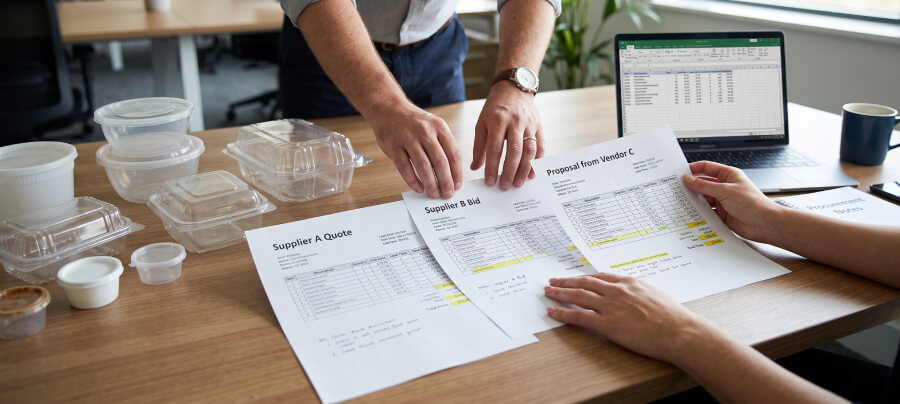
Send the same container spec to three or four plastic container suppliers, and the quotes that come back often aren’t really comparable, one leaves out printing costs, another doesn’t say whether the lead time clock starts after sample approval or on the day you place the order, and by the time you’re done comparing, you can’t really tell which quote is the better deal, so you end up picking whichever supplier feels most trustworthy.
This is a common situation in plastic container wholesale purchasing, and it’s usually not because suppliers are being dishonest, it’s because the information given at the inquiry stage isn’t complete enough, so each supplier ends up quoting based on their own interpretation.
This guide covers what to prepare before requesting quotes, how MOQ, pricing, and lead time affect each other, what questions get you quotes you can actually compare side by side, and the most common reasons lead times run long. Takeout containers and salad boxes are the main example throughout, but the same logic applies to plastic container purchasing more broadly.
What to Prepare Before Requesting Quotes, So You Get an Accurate Number
Getting a spec sheet together before you request quotes is the first step toward an accurate number, without one, suppliers are left guessing at what you actually need, which means you end up comparing quotes for different products without realizing it. At minimum, a spec sheet should cover capacity, material (PP, PET, PS, and HDPE each have different tradeoffs depending on use), heat and cold resistance needs, whether you need custom printing, and your estimated monthly or annual volume.
These details sound basic, but a lot of procurement cases get stuck right here, suppliers working from an incomplete spec can only give a rough price range, and once the spec gets nailed down later, the quote usually goes up, which means the buyer ends up going in a circle for nothing.
What Information Does a Spec Sheet Need, So Suppliers Aren’t Left Guessing?
Containers of the same capacity can come back with very different quotes depending on material, wall thickness, and printing method. Take a common 500 ml salad box as an example, the unit price for PP versus PET can differ by 20 to 30 percent, because the two materials have different cost structures, and PET also needs more careful mold design and molding conditions than PP.
If an inquiry just says “salad box, 500 ml,” the price a supplier sends back is usually based on whatever spec they make most often, which may not match what you actually need, and by the time the sample arrives with the wrong material or the wrong printing method, you’re starting over. Beyond material and capacity, whether the container needs to handle microwave reheating or freezer storage also affects material choice, and these details are worth spelling out in the spec sheet rather than waiting for the supplier to ask.
How Should You Handle Sample Fees, So They Don’t Turn Into a Dispute Later?
Sample fees are usually charged once per design, with the amount landing anywhere from a few hundred to a few thousand New Taiwan dollars depending on how complex the mold is. Some suppliers credit the sample fee against the bulk order once it’s placed, and that’s worth asking about upfront rather than finding an unexplained charge on the invoice later. It’s also worth asking directly whether the sample fee is refundable if you decide not to place an order after reviewing the sample, a blunt question, but cheaper to ask upfront than to argue about after the fact.
Why MOQ, Pricing, and Lead Time Move Together
MOQ (minimum order quantity), unit price, and lead time aren’t three independent numbers, adjusting one usually shifts the other two. Raise an order from 5,000 units to 20,000, for instance, and the unit price typically drops, because fixed costs like mold setup and line changeovers get spread across more units, but a larger order also means more production days, so lead time doesn’t shrink just because the unit price gets better. Missing this connection is an easy way to get stuck later when you’re trying to schedule around a launch date.
Does a Bigger Order Always Mean a Lower Unit Price?
In most cases, yes, but the drop tapers off as the order size climbs, the unit price gap between 5,000 and 20,000 units is usually bigger than the gap between 20,000 and 50,000, because once fixed costs are spread thin enough, what’s left is mostly material and labor, and there’s only so much room to negotiate from there.
If a supplier’s pricing doesn’t follow that curve, say the unit price barely moves even though the order doubles, it’s worth asking why directly, it could be raw material costs fluctuating, or it could mean their pricing strategy isn’t built for the volume you’re planning.
What Stages Make Up a Typical Lead Time?
Lead time isn’t a single number, it’s the sum of sample production, mold making (if a custom mold is needed), the production run itself, and packing for shipment. Standard-spec containers usually take 3 to 7 days to sample, a new mold can take 2 to 4 weeks just for tooling and test runs, the production run itself runs 1 to 3 weeks depending on order size, and customs clearance, container loading, and shipping schedules all still need to be factored in before the product actually arrives.
If an inquiry just asks “how long is the lead time,” the answer a supplier gives usually only covers production days, leaving out mold time and shipping, which means the real arrival date ends up later than expected, a common source of mismatched expectations in procurement.
What Questions Get You Quotes You Can Actually Compare?
Getting quotes onto one table you can actually compare means asking every supplier the same set of questions, instead of letting each one decide what to include.
The Full Checklist to Include With Every Inquiry
Include these items every time you request a quote, so suppliers are all pricing against the same baseline:
- Container capacity and dimensions, plus any heat or cold resistance needs
- Material preference, or ask the supplier to recommend one based on use
- Whether custom printing is needed, including number of colors and print area
- Estimated monthly and annual volume, so the supplier can confirm MOQ fits
- Any food-contact material certification needed (FDA, for example)
- Expected shipping destination, so the supplier can estimate freight and customs time
Putting these details into the inquiry up front gets you answers that actually match what you need, and cuts out a lot of back-and-forth over missing information, which speeds up the whole procurement process. For a fuller look at the entire process, see B2B Food Container Procurement SOP: 8 Steps from RFQ to Delivery, which walks through all eight steps from inquiry to delivery.
Hidden Costs That Are Easy to Miss on a Quote Sheet
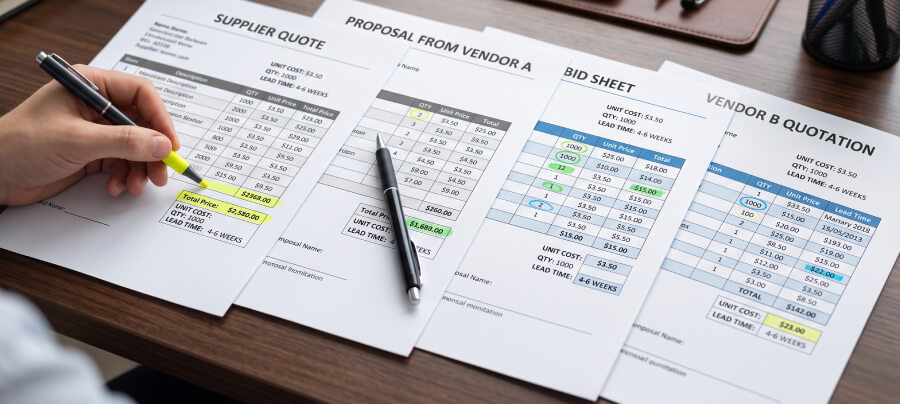
Beyond unit price, a few line items on a quote sheet are easy to overlook but directly affect total cost: whether the mold fee is a one-time charge or gets billed again on reorders, whether the printing plate fee is already included in the quote, whether payment terms are a deposit plus balance or full payment before shipment, and whether freight is covered by the supplier or falls on the buyer.
Leaving these off the quote just means the cost shows up later, once the order is already placed, which is why comparing quotes can’t stop at the unit price, it means laying a few suppliers’ quotes side by side and checking each line item against the others.
How Do You Tell If a Quote Is Reasonable?
Judging whether a quote is reasonable means comparing it against other suppliers, but it also means looking back at that supplier’s own credibility, a great-looking number doesn’t mean much if the same supplier turns out to be unreliable on quality control or lead time down the line.
Whether certification documents are complete, past client work, and how quickly they respond to questions are all factors that have nothing to do with material but still affect whether a supplier is worth a long-term relationship, for a closer look at these questions, see How Should You Evaluate Food Container Suppliers? 8 Cross-Material Questions to Ask, which covers questions worth confirming at the inquiry stage.
Why Do Custom Printing and Mold Making Stretch Out Lead Time?
Custom printing and mold making are the two line items on a quote sheet most likely to push lead time past what buyers expect. Custom printing needs a separate printing plate, and the more colors or the more detailed the artwork, the longer plate-making takes, and for a brand-new container shape, tooling alone takes 2 to 4 weeks, plus the back-and-forth of sampling and mold adjustments, which means the lead time on a first order usually runs well past what a repeat order takes, something worth confirming with a supplier ahead of time so a launch date doesn’t get pushed back.
How Long Should You Budget for Mold Making?
Mold making time varies with tooling complexity and a supplier’s own capacity, a simple shape typically takes about 2 weeks, while a container with multiple compartments or an unusual opening design can push tooling and test runs past 4 weeks combined. It’s worth asking the supplier to estimate tooling time based on your specific shape rather than applying a generic number, and worth confirming upfront how time and cost are handled if a test mold fails and needs rework, an uncommon situation, but one that can have a major impact on lead time when it does happen.
How Far Ahead Should You Order Before Peak Season?
Most plastic container suppliers take on several large orders at once heading into peak season (the summer takeout rush, for example), which puts pressure on production scheduling and makes delays more likely than usual. If your order falls one to two months before peak season, it’s worth confirming capacity with the supplier early and asking for a realistic lead time commitment, rather than planning a launch date around the standard lead time a supplier quotes in the off season.
If part of your sourcing involves overseas imports, how far along the export paperwork is will also affect actual arrival time, a topic a future guide will cover in more detail.
Whether pricing and lead time end up accurate on a plastic container wholesale order comes down largely to how complete the information is at the inquiry stage. Putting together a full spec sheet, asking every supplier the same set of questions, and comparing quotes line by line instead of just the unit price, these steps might sound tedious, but they cut down significantly on back-and-forth later and get lead time estimates a lot closer to reality. If you already know exactly what you need, putting that list together and sending it to suppliers directly is the fastest way to get an accurate quote.