


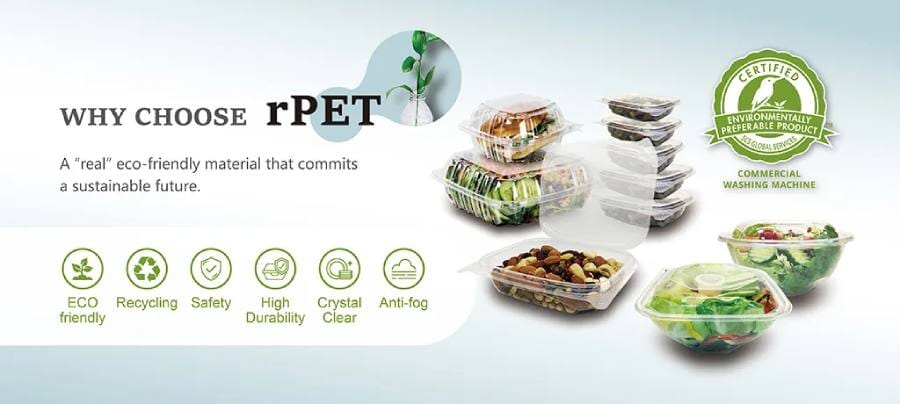
Why are more food brands switching to rPET for packaging?
Regulations restricting or banning single-use plastics keep expanding across markets like the EU and Taiwan, and both consumers and corporate buyers are placing more weight on ESG commitments, so how sustainable a package is has become part of the purchasing decision. More brands are turning to rPET because it performs just as well as virgin plastic while cutting carbon emissions and energy use substantially. Compared to producing virgin PET from scratch, making a plastic bottle entirely from recycled material uses about 75% less energy, and rPET also resists chemicals well without needing special storage conditions or added preservatives.
What Is PET Material
PET stands for Polyethylene Terephthalate, one of the most common food-contact plastics worldwide, identified by recycling code #1. PET is prized for its clarity, light weight, and strong barrier against oxygen and moisture, which is why it shows up so often in beverage bottles, salad boxes, and fruit containers where you want the contents visible. Virgin PET is resin made directly from petroleum, while rPET comes from recycling used PET containers back into raw material. Both share the same chemical structure. What differs is where the raw material comes from and the environmental footprint of getting there, which is what the rest of this guide breaks down.
What Is rPET
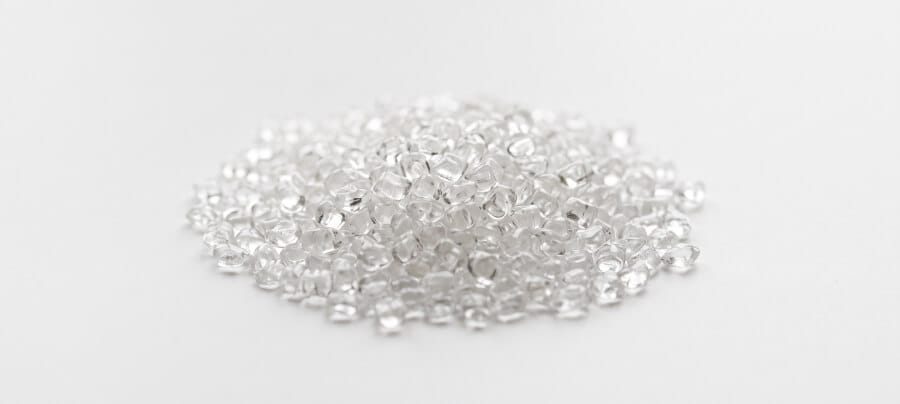
rPET stands for Recycled Polyethylene Terephthalate: used plastic bottles that get collected, sorted, washed, shredded, and pelletized back into usable raw material, so the container doesn’t end up in a landfill or incinerator.
Virgin plastic is typically refined from petroleum, and switching to rPET has become standard practice under today’s plastic reduction policies and ESG expectations. Not every batch of rPET is food-safe on its own, though. Food-grade rPET has to go through strict decontamination and pass EFSA or FDA certification to confirm no chemicals migrate into the food.
Advantages of rPET
- Closed-loop recycling: used bottles get collected and remade into new containers, turning what used to be waste into raw material for the next batch, keeping the material in circulation instead of the landfill
- Lower carbon footprint: compared to producing virgin PET, rPET cuts CO2 emissions by about 36% and reduces water use during production, a measurable difference on the overall carbon footprint
- Performance: rPET holds up well structurally, stays clear enough to show food color accurately, and stacks and ships reliably for takeout and delivery, performing close to virgin PET
- Certifications: GRS (Global Recycled Standard) verifies the recycled content percentage, TUV confirms the material meets environmental standards, and SCS runs independent audits on sustainable materials, giving rPET third-party verification on both quality and sourcing
rPET vs Virgin PET Performance Comparison
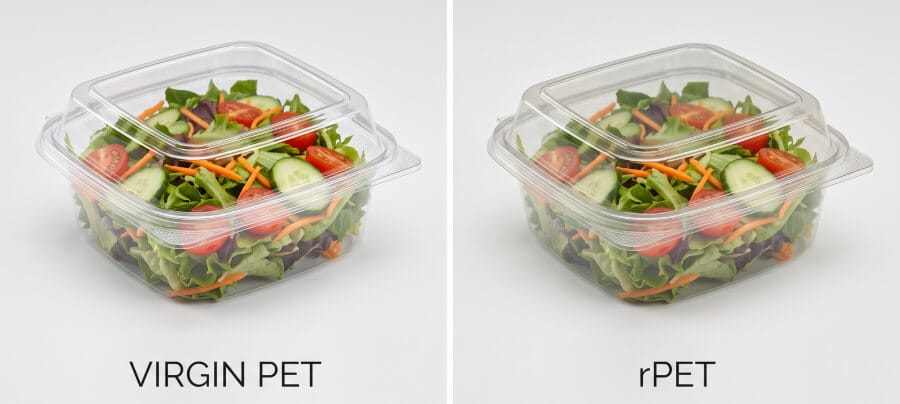
A common concern is that recycled plastic can’t match the quality of new material, but food-grade rPET processed with current technology comes close to matching virgin PET on clarity, heat resistance, and barrier performance.
| Comparison | Virgin PET | Recycled PET (rPET) |
|---|---|---|
| Carbon footprint | Higher, requires petroleum extraction | Substantially lower, roughly 75% less energy use |
| Clarity | Very high | Close to virgin material, thanks to mature processing technology |
| Heat resistance | About 60-70°C | About 60-70°C, comparable to virgin PET |
| Food safety | Meets standard food-contact requirements | Requires EFSA or FDA decontamination certification |
| Circular value | Linear use, discarded after one cycle | Closed-loop, can be recycled indefinitely |
Which Food Containers Work Well With rPET
rPET’s clarity and structural stability make it a good fit for packaging where you want the food visible, commonly used for salad boxes, sushi trays, takeout containers, light meal boxes, and bakery display boxes. For restaurants, supermarkets, and delivery platforms that care about how their packaging looks on the shelf or on arrival, rPET delivers on both presentation and sustainability.
Reach out to the EasyPack team to request samples or browse our rPET food container line.