


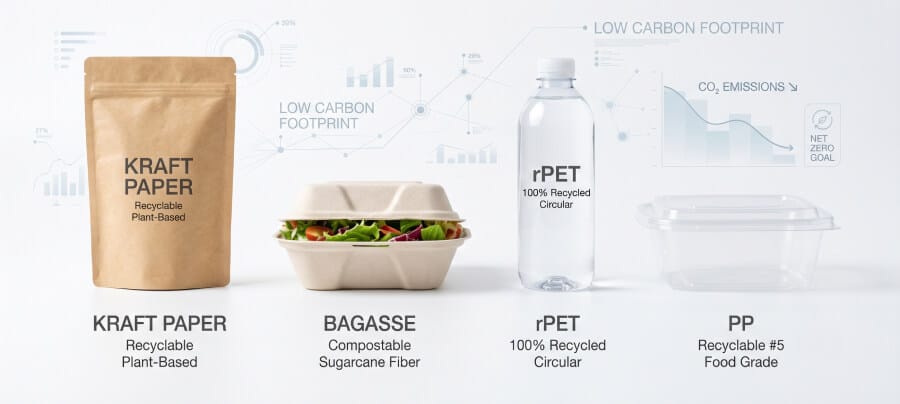
Driven by global ESG mandates and regulations like the EU’s Packaging and Packaging Waste Regulation (PPWR), multinational foodservice brands, large supermarket chains, and global distributors have prioritized supply chain decarbonization. However, many procurement managers operate under misconceptions—”assuming that simply banning plastic or using any single-use item derived from plant-based polymers is automatically eco-friendly.”
Evaluating real environmental performance requires scientific Life Cycle Assessment (LCA). Every stage impacts Scope 3 greenhouse gas reporting: raw material extraction, factory manufacturing energy, logistics transit volume, and end-of-life processing.
A critical insight: “if eco-friendly packaging lacks structural integrity, leading to container collapse or grease seepage during delivery, the carbon cost of the wasted food far outweighs that of the packaging itself.”
Comparative Carbon Footprint & Performance Matrix
| Feature / Metric | Kraft Paper | Sugarcane Bagasse | Recycled Plastic (rPET) | Traditional Polystyrene |
|---|---|---|---|---|
| Fossil Carbon Input | Low to Moderate (Biomass carbon storage benefits) | Extremely Low (100% agricultural byproduct valorization) | Low (Saves 75% energy vs. virgin PET) | High (Petroleum-based raw extraction) |
| Microwave & Oven Safety | Hot-food safe; microwave use depends on inner coating | -20°C to 210°C (Freezer, microwave & oven safe; depends on lamination material) | Material-dependent (Food-grade PP is microwave safe) | Highly Hazardous (Melts and leaches toxins under heat) |
| Structural Rigid Protection | Excellent Rigidity (High tensile strength & rigid perimeter support) | High load-bearing (Rigid fiber construction; stackable) | Extremely High (High impact resistance & tensile durability) | Flimsy & Fragile (High rate of crushing & transit punctures) |
| End-of-Life Pathways | High compatibility with existing paper recycling streams | 100% Industrially Compostable (Decomposes naturally within 60–90 days) | Very High (Food-grade rPET drives closed-loop circularity) | Non-Biodegradable (Chemical migration risks exceed 500 years) |
| Core Culinary Application | Dry foods, bakeries, gourmet burgers, low-moisture takeout | Hot broths, heavy sauces, pasta, ovenable ready meals | Leafy greens, salads, chilled food deli display, fresh meats | Widely banned or phased out across global markets |
Technical Disclaimer: Practical oven-readiness of sugarcane pulp containers depends entirely on specific lamination film and inner liner specifications applied during secondary processing.
Infrastructure and Global Regulations: Sourcing with Disposal-Side Insight
Decarbonization strategy cannot stop at the factory gate. When conducting a Life Cycle Assessment of alternative materials and plastic containers (LCA of plastic food containers), the end-of-life disposal pathway available in the target market dictates both regulatory compliance and real-world carbon reductions:
1. Closed-Loop Recycling for Paper and rPET Portfolios
In regions with mature recycling infrastructures like Western Europe and North America, Kraft Paper Containers or Recycled PET (rPET) Series align seamlessly with municipal waste streams. Food-grade rPET verified by the National Association for PET Container Resources (NAPCOR) requires significantly less energy than virgin resin manufacturing, yielding up to 75% reduction in production energy consumption. This mitigates Scope 3 emissions while shielding enterprise chains from plastic packaging taxes and Extended Producer Responsibility (EPR) regulations.
2. Commercial Composting for Plant-Based Fibers
Sugarcane Bagasse Containers utilize fibrous waste from juice extraction, capturing a highly competitive upstream carbon baseline. Under commercial composting conditions, they completely biodegrade within 60–90 days without toxic residues. However, sustainability officers must verify that target destination markets have active industrial organics recycling and commercial composting infrastructures. If compostable containers end up in landfills or incinerators, intended carbon reduction benefits drop significantly.
3. Securing Technical Defense Lines: PFAS-Free Sourcing
Modern packaging must ensure verified safety under FDA guidelines. EasyPack’s eco-friendly series is naturally free from BPA and phthalates. The company provides certified PFAS-free packaging options, giving distributors and enterprise buyers required documentation for strict supply chain compliance audits.
The Nesting Paradox: Optimizing Shipping Capacity to Eliminate Transport Carbon
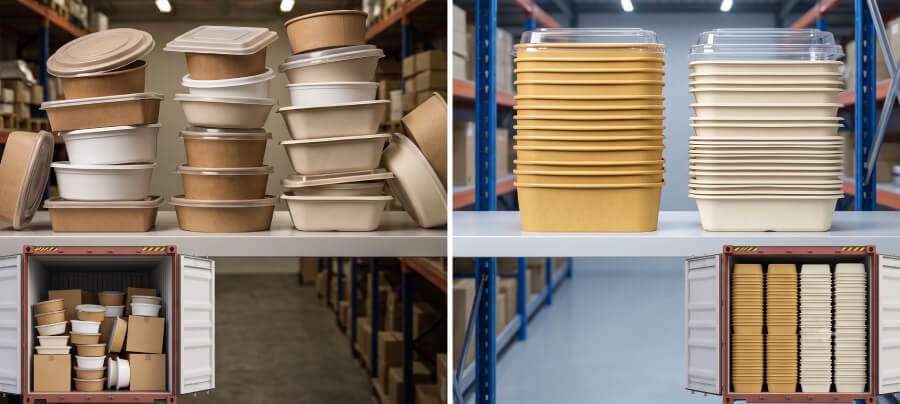
When conducting a comprehensive sustainable food packaging cost analysis, many procurement officers overlook the hidden carbon costs of “Nesting Capabilities”. Takeout boxes that lack dense nested geometry create excessive airspace within ocean freight or truck logistics, resulting in high transport costs and fuel waste to ship nothing but “invisible air”.
To deliver on the 7R principles of sustainability—specifically Reduce and Substitute—EasyPack implements highly optimized, standardized B2B SKU matrices.
By engineering strict geometric stacking tolerances across alternative materials, high nested density minimizes transport emissions per unit during long-haul shipping while shrinking retail storage requirements by up to 40%.
As an exclusive engineering highlight: “EasyPack’s standard OP/PT plastic sushi trays and BP sugarcane pulp sushi boxes share 100% perfect lid cross-compatibility. This premium structural feature lets supermarket delis and catering networks implement flexible material-mix plastic reduction strategies without changing menu sizing or resizing takeout bags.”
Commercial Insights: Turning Packaging Decarbonization into Tangible ROI
For multinational franchises and retail hypermarkets, sourcing low-carbon containers has become a direct driver of operational ROI:
Data-Driven Corporate ESG Reporting: Global brands operate under clear carbon reduction timelines. Sourcing materials like rPET, which saves up to 75% energy versus virgin plastic, allows procurement data to integrate directly into Scope 3 greenhouse gas reporting.
Eliminating Greenwashing Compliance Risks: Environmental marketing claims face historic enforcement scrutiny based on transparency rules like the FTC Green Guides. EasyPack’s portfolios are backed by international certifications including ISO 9001 (Quality Management), ISO 22000 (Food Safety Systems), and DIN CERTCO (Compostability). These credentials protect companies from greenwashing liabilities while driving authentic consumer brand trust.
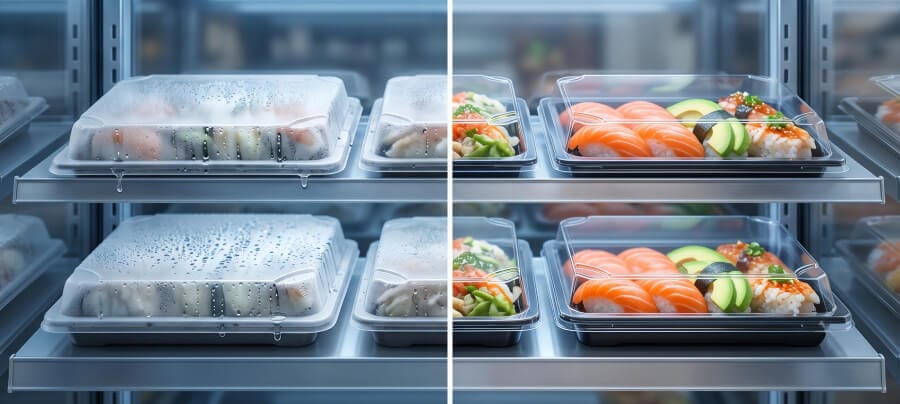
Mitigating Food Spoilage via High-Barrier Technologies: A package’s carbon efficiency cannot be separated from the food it protects. EasyPack excels in manufacturing custom High-Barrier EVOH Freezer Food Boxes tailored for supermarket delis, pre-packaged ready meals, and high-value meats. Precise oxygen barrier and shelf life extension technologies help brands prevent retail food spoilage, cutting down the massive indirect carbon footprint generated by organic waste.
EasyPack’s Strategic Scene-Specific Sourcing: Direct Multi-Material Sourcing
Responsible sourcing means implementing scene-specific factory-direct sustainable packaging solutions rather than forcing entire franchise menus into unoptimized, single-material packages:
- Consolidated Sourcing Eliminates Logistical Carbon: EasyPack operates vertically integrated production lines for Heavy-Duty Kraft Paper, Molded Sugarcane Bagasse, and high-tensile plastics. Global importers and restaurant networks can eliminate multi-vendor auditing complexities while saving the carbon footprint of multi-stop shipping.
- Precision Material-Matching Matrix: EasyPack organizes its portfolio into clear functional material streams, maintaining equivalent dimensions and volume sizes across lines. Brands can transition to eco-friendly options without hidden costs of resizing takeout bags.
- Oven-Ready & Microwavable Functional Portfolios: For central kitchens and hypermarket ready-to-eat brands, the sugarcane bagasse line withstands temperatures from -20°C to 210°C, supporting direct transit from cold-chain industrial freezers into oven or microwave heating.
- Heavy-Duty Rigid Perimeter Support: Engineered for high-volume transport requirements of North American and European delivery networks, the primary Kraft paper series provides exceptional perimeter support and rigid protection for gourmet burgers, fried sides, and pastries, ensuring foods remain uncrushed.
Food Packaging Frequently Asked Questions (FAQ)
Q1: Which food packaging material has the lowest carbon footprint?
A: There is no single “lowest carbon” material, as environmental impact must be calculated through scene-specific Life Cycle Assessment (LCA). While sugarcane bagasse and unbleached Kraft paper boast lower factory production emissions, lightweight and highly recyclable rPET can significantly reduce transportation emissions and packaging taxes in mature urban areas. The most critical metric is selecting a material that eliminates food spoilage and leakage; organic food waste generates methane in landfills, which carries a far higher carbon equivalent penalty than the packaging itself.
Q2: How does rPET help reduce packaging costs and taxes for global food businesses?
A: Global markets like the UK and EU enforce steep plastic packaging taxes (PPT) on containers incorporating less than 30% recycled content. Sourcing traditional, fossil-based virgin PET exposes brands to strict fiscal penalties. Sourcing EasyPack’s 100% PCR recycled food-grade rPET containers not only reduces energy consumption by 75% during manufacturing, but also grants complete exemption from these plastic taxes, turning compliance into an operational financial advantage.
Q3: Does a “Compostable” or “Bio-Based” label guarantee the lowest environmental carbon impact?
A: A compostable certification indicates that an item can cleanly break down in industrial composting facilities within 60–90 days, creating a circular end-of-life cycle. However, to minimize total GHG emissions, supply chain managers must evaluate transport capacity and nesting tolerances. Packaging that fails to nest tightly wastes ocean freight container space, drastically increasing the logistics carbon footprint per unit. Sourcing from a manufacturer like EasyPack that utilizes standardized SKU matrices and high-density nesting geometries ensures a highly resilient, low-carbon supply chain.
Partner with EasyPack for Certified Decarbonization
In today’s global commercial market, verifying the carbon footprint of food packaging materials is no longer optional—it is a baseline compliance gateway for international enterprise trade. Through direct multi-material sourcing and rigorous LCA mapping, brands can achieve green compliance without sacrificing functional strength or corporate margins.
“Are you ready to calculate and optimize your brand’s packaging carbon footprint? Contact EasyPack’s sustainable packaging expert team today to request product samples and secure your tailored multi-material carbon-reduction solution.”