


The Evolution of Barrier Technology in Paper Packaging
In the global race toward net-zero carbon emissions, the foodservice industry and packaging processing plants are undergoing a profound material revolution. For decades, traditional paper containers have relied on conventional polyethylene (PE) petroleum-based plastic coatings to achieve essential water and oil resistance. However, because PE coatings are non-biodegradable and exceptionally difficult to separate from paper fibers within standard recycling systems, they are rapidly being phased out by sustainable supply chains worldwide. According to the sustainable materials management frameworks championed by the U.S. Environmental Protection Agency (EPA), reducing fossil-fuel-derived plastics in single-use packaging has become a primary metric for corporate Scope 3 carbon footprint reduction.
This transition is particularly prominent in highly sustainability-driven regions such as the Netherlands and the Nordic markets. These countries support a mature e-commerce logistics, grab-and-go deli, and delivery culture, where organic brands and consumers maintain strict purchasing preferences for “plastic-free” or commercially compostable labeling. To achieve absolute legal compliance without sacrificing moisture barrier performance, plant-based biopolymer coating technology has emerged as the definitive solution. By introducing premium PLA coating paper packaging (polylactic acid coating paper packaging), Easypack has successfully eliminated the trade-off between environmental protection and high-speed mechanical performance, defining a new low-carbon benchmark for global buyers.
Clarifying the Tech: Functional Coatings vs. Pure Recycled Polymers
When managing B2B sustainable sourcing, transparency in technical specifications is the foundation of cross-border partnership and trust. Many procurement directors auditing multi-material portfolios frequently confuse the application of bioplastics across different substrates. Easypack provides a clear technical distinction: our rigid, pure recycled polymer lines (such as our rPET eco-friendly recycled food container series) are 100% circular economy polymers engineered to maintain a closed-loop recycling stream and contain 0% PLA. These products adhere to strict international chemical restrictions and trace-verification audits, backed by SCS Recycled Content Certification and the Global Recycled Standard (GRS).
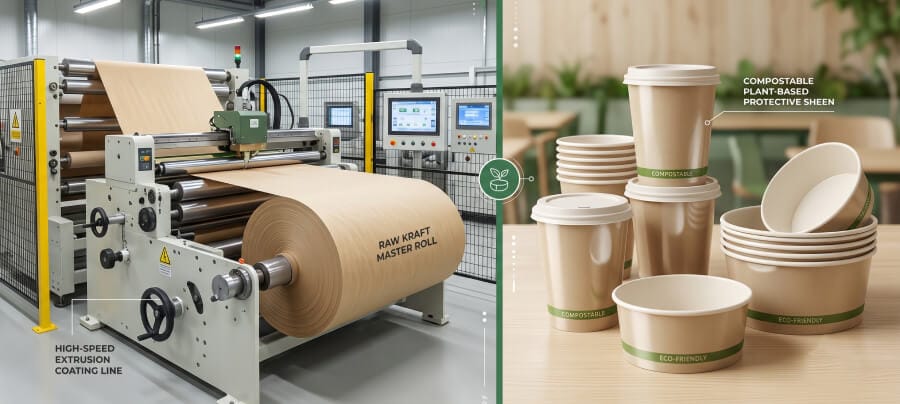
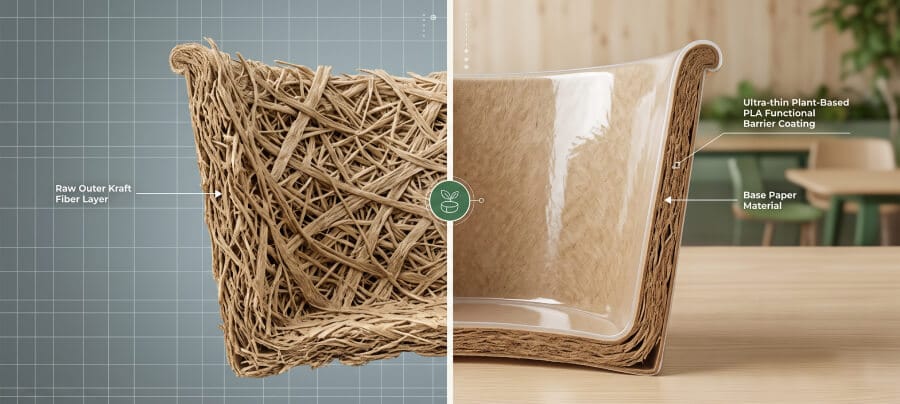
Conversely, polylactic acid (PLA), derived from renewable plant resources like corn starch or sugarcane, is utilized exclusively within Easypack’s processing matrix as an internal functional barrier for paper and molded fiber products. This ultra-thin compostable paper coating acts as a core defense layer inside takeout lunch boxes, hot beverage cups, and soup bowls. Compliant with the U.S. Food and Drug Administration (FDA) food ingredient and packaging guidelines, it delivers exceptional grease, water, and acid resistance, preventing liquids from compromising the outer paper structure.
As innovators in material science, we maintain total transparency: current PLA coatings require industrial composting facilities to achieve optimal biodegradation. Consequently, Easypack has already initiated advanced R&D into next-generation PHA (polyhydroxyalkanoates) biopolymers. PHA possesses the unique ability to naturally degrade in marine environments and backyard home compost setups. This continuous tracking of material frontiers ensures our enterprise partners always remain ahead of evolving international environmental directives.
The Foundation: Industrial Kraft Paper Rolls for Global Sourcing
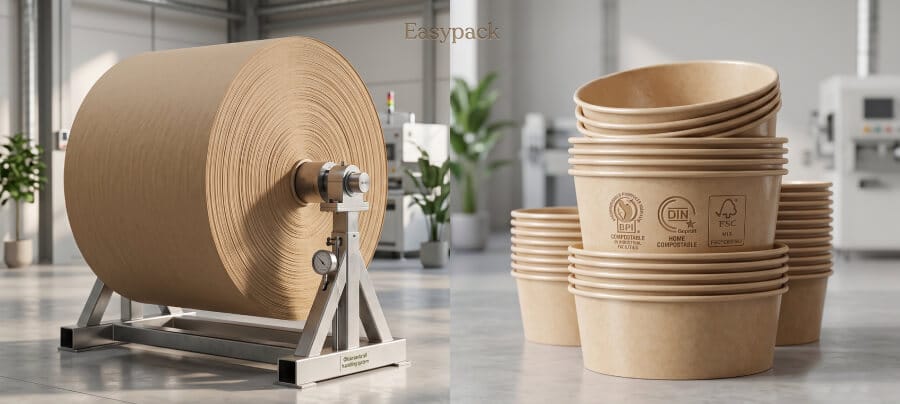
For large-scale food packaging processing plants, multinational manufacturing hubs, and global brands hunting for primary source suppliers, the strategic value of packaging extends beyond the finished container—it rests on the structural consistency and mechanical machining compatibility of the raw material. Easypack addresses these volume demands by supplying industrial-grade, high-performance kraft paper roll master rolls tailored for global distribution.
When processing facilities feed paper rolls into automated, high-speed cup-forming or box-folding machinery, even minor dimensional variances can lead to web breaks, machine jamming, or uneven coating distribution. Easypack tightly regulates the core mechanical metrics that B2B buyers value most:
- GSM Weight Consistency: Offering a versatile gram-per-square-meter spectrum (from lightweight wrap applications to heavy-duty container bases) with excellent thickness uniformity.
- Width & Slitting Tolerances: Utilizing advanced automated slitting machinery to control edge tolerances within millimeter-level precision, ensuring seamless compatibility with global forming machines.
- Tensile Strength & Bursting Index: The unbleached, pure natural long fibers give the paper web elite structural resilience, preventing tearing or bursting under high-speed tension and temperature-heavy extrusion lines.
When this high-tensile industrial roll substrate is paired with Easypack’s precise biopolymer extrusion coating, it creates the ultimate kraft paper with PLA coating combination. This hybrid solution significantly improves factory yield rates and run-time optimization while its unbleached brown finish communicates an organic brand message. This aligns perfectly with the green sourcing principles advocated across our Sustainable Food Packaging Solutions Directory, helping enterprises anchor a stable, low-carbon, and highly efficient manufacturing base from the very first step.
Strategy: Life Cycle Carbon Impact of Multi-Material Lines
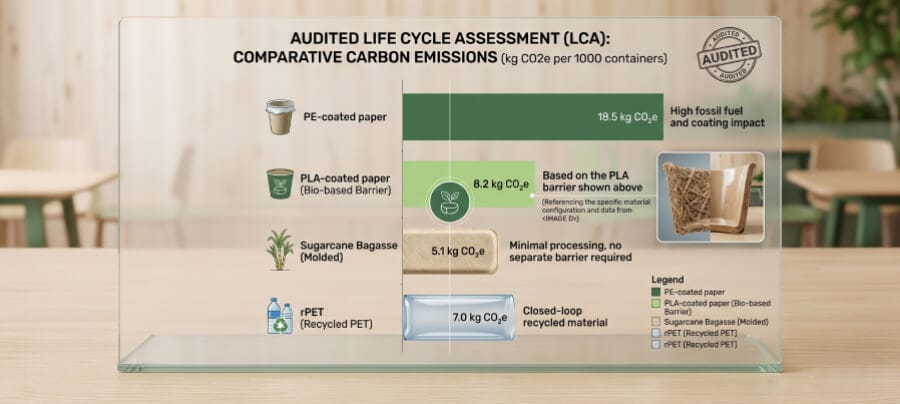
In the blueprint of corporate green transformation, data integrity outvalues marketing rhetoric. To help multinational brands and food processing facilities mitigate the legal risks associated with modern greenwashing audits, Easypack implements a standardized Life Cycle Assessment (LCA) framework. We trace the environmental footprint of our material lines from cradle-to-gate: spanning raw material extraction, factory extrusion processing, cross-border freight consolidation, and end-of-life treatment.
According to carbon accounting metrics audited in collaboration with SGS Global Sustainability and Carbon Services, replacing conventional petroleum-based PE coatings with verified PLA coated paper packaging yields measurable carbon reduction dividends. Because polylactic acid is derived from agricultural bio-mass, the parent crops absorb and store significant atmospheric carbon dioxide through natural photosynthesis during their cultivation cycle. This biogenic carbon storage effectively offsets a substantial portion of Scope 3 emissions for corporate procurement portfolios.
Simultaneously, enterprise purchasing directors often worry about hidden management costs and logistics risks when adjusting vendor structures. Easypack’s multi-material hybrid inventory strategy solves this supply chain problem. Whether you source raw industrial kraft paper rolls or molded sugarcane bagasse containers, our engineering teams maintain strict dimensional tolerance consistency across all product designs. This allows global buyers to seamlessly shift between kraft paper, molded fiber, and rPET substrates to fit changing seasonal menus without expensive modifications to downstream automated packaging lines or custom tooling configurations.
Furthermore, from an energy consumption perspective, manufacturing natural kraft paper and biopolymer PLA coatings requires lower thermal and electrical loads compared to the high-emissions refining processes needed for native petroleum-based plastics. This native advantage of low carbon food packaging translates directly into financial defense, helping proactive European buyers navigate upcoming Carbon Border Adjustment Mechanisms (CBAM) and regional carbon tax audits while isolating their operations from shifting fossil fuel regulatory penalties.
Market Focus: Meeting Regional Compliance (Netherlands & Organic Brands)
Western European markets, particularly the Netherlands and the Nordic territories, enforce some of the world’s strictest environmental barriers regarding circular economy integration and supply chain due diligence. The Netherlands supports a highly sophisticated e-commerce retail, grab-and-go deli, and delivery infrastructure, creating a massive, non-negotiable demand for high-barrier packaging solutions that are also commercially compostable. Under the strict supervision of the EU Anti-Greenwashing Directives, local organic brands and processing plants require packaging that visually conveys an honest sustainability statement.
Within this rigorous market framework, Easypack’s unbleached brown kraft packaging array delivers exceptional regional adaptability. The organic, earthen tone of natural brown kraft serves as a direct visual declaration of eco-friendly practices. It eliminates the need for redundant, complex text over-printing, serving as an intuitive hallmark of environmental stewardship that minimizes regulatory audit friction under modern anti-greenwashing frameworks.
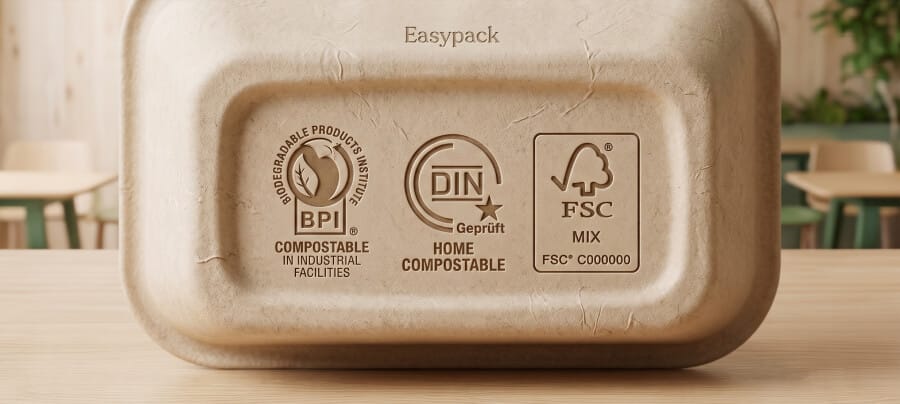
When sourcing managers implement this kraft paper with PLA coating architecture, they secure a balanced combination of high-barrier food protection, organic brand aesthetics, and flawless regulatory compliance. Our plant-based coating and container portfolio carries elite international environmental credentials, including DIN CERTCO Industrial Compost Certification for Europe and the Biodegradable Products Institute (BPI) Certification for North America. These verified legal passports ensure global restaurant chains can expand across elite European distribution channels with an uncompromised regulatory defense chain.
Partnering for a Low-Carbon Future
In 2026, choosing advanced plant-based barrier coatings and premium industrial kraft paper rolls is no longer a simple purchasing decision; it is a long-term strategic investment that determines whether a global business can thrive in a carbon-constrained marketplace. By pairing heavy-duty kraft paper webs with certified compostable functional coatings, food processing facilities, foodservice distributors, and multinational chains can protect their automated manufacturing efficiencies while driving real corporate decarbonization targets.
Easypack manufactures its entire sustainable foodservice inventory in Taiwan under strict ISO 22000 Food Safety Management and ISO 9001 Quality Management systems. Combining international authority compliance with comprehensive multi-material manufacturing capabilities, we serve as your trusted cross-border partner for a sustainable future.
Secure Your Global Low-Carbon Sourcing Strategy:
- Download Easypack’s Multi-Material Life Cycle Carbon Optimization White Paper to unlock fully verified, transparent LCA reduction data.
- Contact Easypack’s Technical Packaging Advisory Team today to request comprehensive spec sheets and testing samples for our advanced plant-based PLA coated paper rolls!