


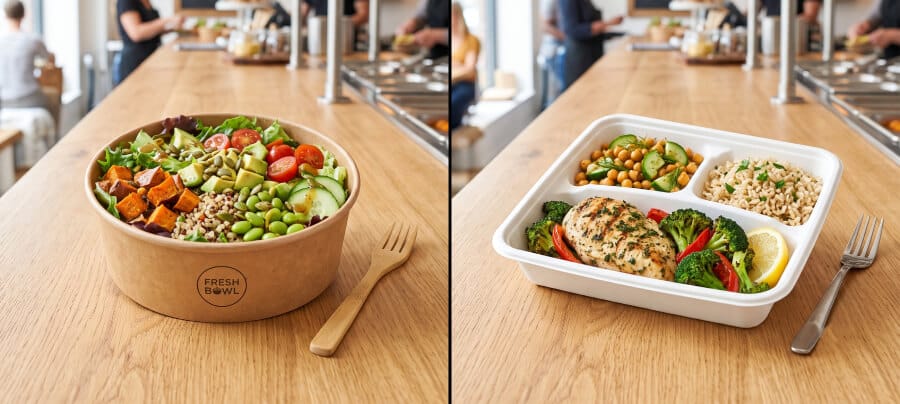
The Strategic Choice in the U.S. Packaging Landscape
In today’s highly competitive U.S. foodservice market, sustainable packaging procurement has evolved from a mere brand alignment effort into a mission-critical compliance battle. As U.S. food packaging regulations tighten nationwide—driven by California’s sweeping SB 54 plastic reduction mandate and expanded municipal enforcement against single-use plastics and expanded polystyrene (EPS) across New York and Washington—enterprise restaurant chains, urban delivery networks, and foodservice distributors face unprecedented supply chain transformation pressures.
According to procurement guidelines championed by the U.S. Environmental Protection Agency (EPA), minimizing packaging waste is now a foundational metric for corporate Scope 3 carbon footprint reduction. However, purchasing directors frequently encounter a classic procurement dilemma when auditing their inventory lines: Should they prioritize heavy duty kraft paper boxes for their structural rigidness and artisanal visual appeal, or implement molded sugarcane bagasse containers for their rapid renewability and exceptional thermal resistance?
For multi-location brands with diverse menu architectures, blindly over-indexing on a single material often leads to compromised food presentation during transit or unnecessary supply chain fragmentation. This comprehensive guide provides an operational, scene-based comparison between these two sustainable powerhouses, helping your brand engineer a resilient, compliant, and cost-effective food packaging layout.
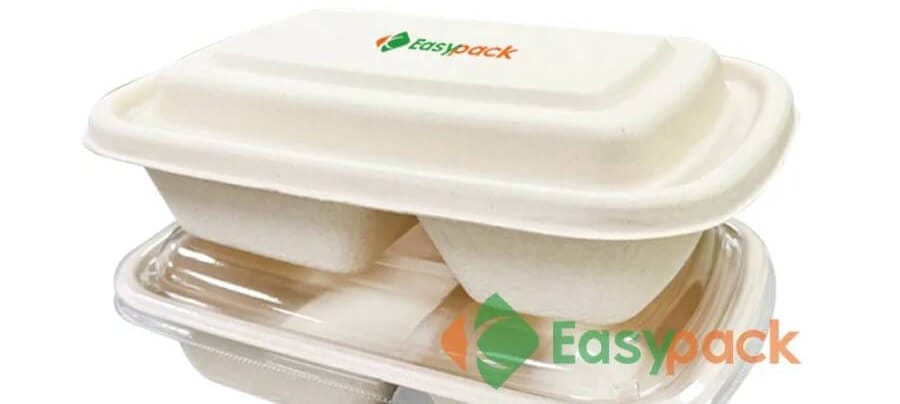
Kraft Paper Packaging: Aesthetic Appeal Meets Physical Strength
When evaluating reliable, high-volume takeout and delivery solutions, kraft paper packaging continues to hold a dominant strategic position in the market. Rather than relying on standard recycled paperboard, industrial-grade natural kraft utilizes chemically processed, unbleached virgin wood fibers. This manufacturing method preserves the native, tightly interlocking cellulose fiber matrix of the wood, providing the final material with exceptional inherent tensile strength, burst resistance, and perimeter load-bearing resilience under high-stress distribution cycles.
For fast-paced, high-density urban delivery ecosystems like New York City or Chicago, maintaining box rigidness is essential for customer satisfaction. Takeout boxes packed inside a third-party courier’s thermal bag must withstand intense vertical stack pressure. Easypack’s engineered kraft paper boxes for food utilize high-density food-grade kraft paper paired with a specialized PE oil and water-resistant barrier lining. This robust composition not only guarantees zero grease seepage but also provides superior sidewall structural rigidness, ensuring that containers stacked at the bottom do not deform or collapse under trapped humidity.
▶ You can explore our standard dimensions for volume orders through our wholesale Kraft Paper Food Containers Product Line.
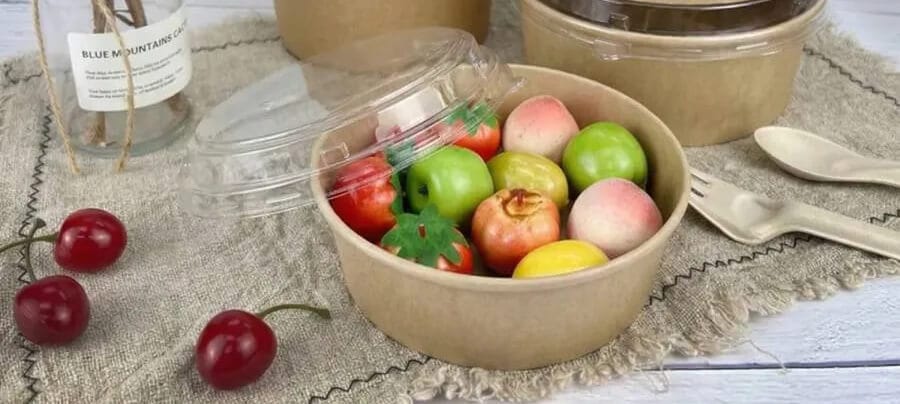
Beyond raw mechanical performance, natural brown kraft paper delivers an organic, premium visual experience that connects with modern, eco-conscious American consumers. In an era where social media content drives brand equity, kraft paper’s natural matte finish eliminates harsh ambient reflections, ensuring excellent photo presentation during unboxing and fostering organic user-generated content on platforms like Instagram and TikTok.
Currently, Easypack’s kraft container portfolio features bowl-shaped, rectangular, square, and specialized sushi profiles, with capacities ranging from 450 ml up to 1800 ml across 31 distinct standardized SKUs.
▶ To understand the safety metrics and recycling dynamics of paper composites within cross-border supply chains, read our technical feature: What Are Kraft Paper Food Boxes? Materials, Manufacturing Process, and Eco Trends Explained.
▶ For an in-depth regulatory audit on lifecycle assessments and international compliance frameworks governing fiber-based alternatives, refer to our strategic industry briefing: Evaluating the Extended Producer Responsibility (EPR) and Sustainability Mandates for Fiber Food Packaging
Sugarcane Bagasse: High-Performance Functionality for Hot & Oily Foods
When a brand’s menu focuses on high-temperature, liquid-heavy, or oil-saturated dishes—such as hot soups, fresh pasta, or saucy American BBQ—sugarcane bagasse food packaging delivers exceptional high-performance functionality.
Bagasse is a fibrous byproduct derived from the sugarcane extraction industry. Sugarcane features an ultra-fast agricultural renewal cycle of only 10 to 12 months. Compared to wood pulp used for paper manufacturing, which requires decades of timber growth, bagasse’s rapid carbon absorption rate and brief renewal timeline match corporate sustainability goals centered on resource conservation and circular economy integration. As a vertically integrated eco-friendly food packaging manufacturer, Easypack monitors quality directly from raw plant fiber processing to offer highly competitive wholesale packaging solutions for enterprise chains and contract caterers.
From an operational perspective, molded pulp technology gives sugarcane bagasse containers (without lamination) a native thermal tolerance up to 115°C. When serving hot foods, the molded fiber’s micro-porous structure acts as a natural steam regulator, venting excess moisture out of the box to prevent fried items or starches from turning soggy during transit. Crucially, when subjected to microwave heating, pure bagasse containers demonstrate excellent structural integrity, remaining completely safe without warping or releasing plasticizers under stringent U.S. Food and Drug Administration (FDA) food ingredient and packaging guidelines.
▶ For detailed chemical safety specifications and microwave performance metrics, refer to our dedicated guide: Is Kraft Box Eco-Friendly? The Truth About Sustainable Food Packaging.
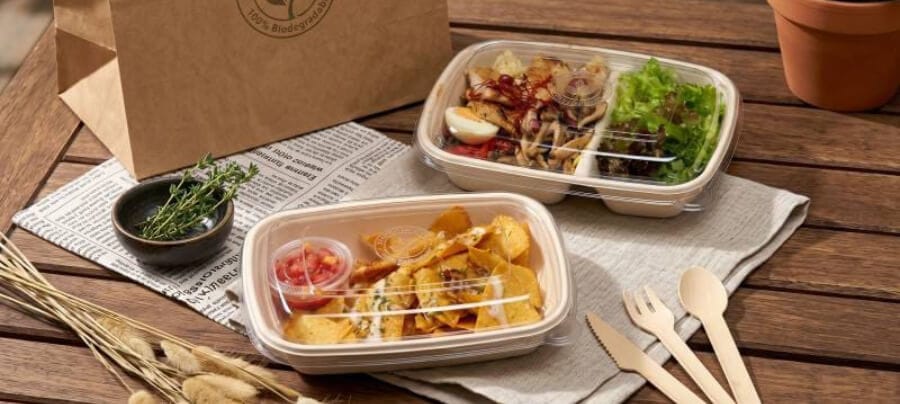
Additionally, for supermarket deli aisles and grab-and-go cold displays, the sugarcane container series can be paired with high-clarity anti-fog lids. This configuration effectively seals in freshness while preventing condensation fogging, ensuring a premium product display that encourages impulse purchases.
To satisfy the regulatory audits required by global corporate buyers, Easypack’s molded fiber series is fully certified by the Biodegradable Products Institute (BPI) for commercial compostability and complies with Europe’s DIN CERTCO industrial compost standards. This verified compliance gives North American enterprise buyers a reliable green passport to navigate complex state-level packaging bans and environmental taxes effortlessly.
Operational Comparison: Choosing Based on Your Menu & Geography
At the operational scale, enterprise packaging procurement must be driven by quantifiable engineering metrics and scene-based financial logic. The following decision matrix provides a clear reference for corporate purchasing directors managing multi-state brand deployments:
B2B Packaging Decision Matrix
| Operational Criteria | Heavy Duty Kraft Paper Boxes | Sugarcane Bagasse Containers |
|---|---|---|
| Primary Structural Benefit | Superior sidewall rigidness, highly stackable, high shock absorption | Native grease barrier, high leak resistance, microwave safe |
| Thermal & Microwave Rating | Moderate (Short microwave cycles only due to PE barrier limitations) | Excellent (Native thermal threshold up to 210°C / 410°F; specific oven/microwave tolerance is dependent on lamination material & lining specifications) |
| Humidity & Moisture Control | Moderate (Requires strategic vent cuts or lid spacing design) | Superior (Micro-porous structure breathes out excess hot steam) |
| Delivery Stackability | Excellent (High vertical tensile resistance when stacked dry) | Good (Maintains 92%+ stability under high-heat grease load) |
| Optimal Menu Applications | Bakeries, gourmet burgers, sandwiches, dry wraps, fresh salads, fried sides, and low-moisture hot foods (e.g., field-proven and utilized in enterprise-level supermarket rotisserie & hot-bar arrays) | Hot broths, pasta, oily BBQ meats, supermarket deli counter arrays, and prepared meals requiring flexible microwave reheating or commercial oven compatibility |
| Compliance & Quality Badges | ISO 9001, ISO 22000, SGS Safety Audits | BPI Certified Compostable, DIN CERTCO Certified, SGS Tested |
Scene-Based Deployment Strategies
- Bakeries, Gourmet Burger Chains, and Low-Moisture Supermarket Hot Bars: We strongly recommend implementing heavy-duty kraft packaging configurations for menu items that rely heavily on robust structural protection and crisp texture retention. Rigid kraft paper constructions offer superior perimeter support, ensuring that multi-layered burgers or delicate artisanal pastries remain uncrushed during high-volume transit. Furthermore, its premium tactile solidity reinforces an authentic, artisan brand positioning at the point of consumption.
- High-Moisture Supermarket Delis, Oven-Ready Prepared Meals, and High-Heat Takeout: Molded sugarcane bagasse stands as the industry-standard choice for demanding food service environments requiring post-purchase thermal reheating. It effectively mitigates common operational challenges such as grease seepage and structural degradation typical of heavy-sauce menu items. Engineered for superior thermal performance, these containers maintain complete structural stability during extended microwave reheating or commercial oven workflows, ensuring strict food-contact safety compliance without altering the food’s natural flavor profiles.
U.S. Regional Regulatory Enforcement vs. Logistics Efficiency
Geographic regulatory compliance heavily influences procurement in the United States. For instance, in the California market, stringent waste diversion frameworks managed under the state’s sustainable packaging mandates require verified commercial compostability, making BPI-certified sugarcane bagasse containers the preferred choice for local compliance.
Conversely, in New York or Chicago, where high-velocity, multi-tiered urban delivery networks dictate off-premise revenue, physical package survival during cold-weather transit is paramount. In these dense logistics markets, high-durability, cost-effective compostable delivery containers (such as heavy-duty kraft paper box lines) are often favored by regional distributors to minimize box failure rates during multi-drop shipping.
Technical Spotlight: Vertical Load-Bearing and Structural Stability Test
According to compression tests performed at Easypack’s R&D laboratory under a simulated delivery environment (35°C ambient temperature with 85% relative food humidity):
- Heavy Duty Kraft Box Series: Sustained a maximum vertical top-pressure up to 12 kg, showcasing elite structural resistance to crushing in stacked delivery configurations.
- Sugarcane Bagasse Series: Maintained over 92% structural stability and a vertical load-bearing threshold of 9.5 kg after holding 90°C greasy food for 45 minutes.
These quantified metrics ensure that whichever material fits your menu, Easypack delivers a near-zero damage rate upon delivery unboxing.
Strategic Sourcing: Reducing Switching Costs with a Multi-Material Partner
For chief operating officers and procurement heads managing multi-unit restaurant groups, fragmented vendor sourcing creates significant hidden overhead. Sourcing paper boxes from Vendor A and bagasse bowls from Vendor B increases administrative communication burdens and introduces the risk of lid-mismatch issues caused by manufacturing tolerance variations between separate production facilities.
Maximizing Efficiency with a Unified SKU Matrix
Partnering with a comprehensive, multi-material manufacturer like Easypack eliminates supply chain fragmentation. Easypack integrates a Unified SKU Matrix across its product design phase, ensuring that different eco-friendly materials share identical structural dimensional tolerances.
This means your kitchen assembly staff can use the exact same eco-friendly lid to fit securely onto both a kraft paper box and a sugarcane bagasse container. This universal lid-fit capability streamlines kitchen operations during peak rushes, reduces warehouse inventory SKU counts, and minimizes material switching costs for corporate expansions.
The Taiwan Manufacturing (MIT) Advantage & Customization Risk Control
Easypack’s production facilities are located entirely in Taiwan, operating under strict ISO 22000 Food Safety Management and ISO 9001 Quality Management international frameworks. All product lines are regularly verified by SGS to guarantee total transparency in food-contact safety data.
Furthermore, regarding international compliance for our circular economy lines (such as rPET recycled plastic profiles), Easypack has secured authority badges including SCS Recycled Content Certification and the Global Recycled Standard (GRS) for chemical and materials control. In today’s volatile global supply chain climate, Taiwan Manufacturing (MIT) represents a secure, tariff-insulated procurement alternative, offering reliable lead times, low defect rates, and steady cross-dock shipping schedules for North American enterprise clients.
To help global brands rapidly deploy customized packaging arrays, Easypack provides an agile 3-Step Customization Roadmap:
- Consultation & Menu Mapping: Tailoring the precise ratio of kraft paper and bagasse based on your menu’s moisture and oil content.
- 3D Prototyping & Leak Auditing: Offering physical mockups to verify load-bearing rigidity before initiating large-scale production runs.
- Automated Production & Freight Consolidation: Supplying wholesale containers directly to your domestic distribution centers with full international certification coverage.
Building a Resilient & Compliant Brand Image
Sustainable foodservice packaging procurement is far more than a simple cost center—it is a long-term investment in regulatory security, transit quality control, and consumer retention. Forward-thinking American food brands should move away from viewing kraft paper and sugarcane bagasse as mutually exclusive choices. Instead, they should utilize both materials strategically based on temperature, oil volume, and local state environment mandates.
By consolidating your procurement with a vertically integrated, multi-material manufacturer in Taiwan with full international certification coverage, your brand secures a resilient, high-yield supply chain. This strategic balance ensures your packaging complies with local environmental regulations while maintaining a premium delivery experience that strengthens your market position.
Take the Next Step in Your Sustainable Procurement Strategy:
- Download Easypack’s 2026 U.S. Market Packaging Catalog to explore our standardized dimensions and unified SKU specifications.
- Contact Easypack’s Enterprise Consultation Team today to request a customized, compliant packaging blueprint tailored for your multi-location restaurant chain!