



Takeout containers and packaging stamped “biodegradable” or “compostable” show up everywhere now, on single-use plastic and plant fiber packaging alike.
Most people treat the two words as interchangeable, or assume either label means the container can go straight into the kitchen compost bin once it’s empty.
In reality, these terms point to very different decomposition conditions and timelines under international standards, and they lead to different disposal paths.
Mixing them up does more than leave a well-intentioned container sitting in a landfill for years. Buyers evaluating packaging materials can get pulled along by vague marketing language, end up choosing a material that doesn’t fit their actual needs, or misjudge whether a supplier’s eco-friendly claim actually holds up.
This article separates “biodegradable,” “degradable,” and “compostable,” three terms that get used interchangeably far too often, and explains why PLA, a material that looks eco-friendly on paper, still draws so much scrutiny.
What Does “Biodegradable” Actually Mean?
Biodegradable means a material can be broken down by microorganisms like bacteria and fungi into water, carbon dioxide, and biomass. The definition itself sets no timeline and no required environment for that breakdown to count.
The organisms doing the breaking down are usually already present in soil, compost, or ocean environments, bacteria like Pseudomonas species or fungi like Aspergillus. These aren’t exotic strains; they’re the decomposers nature already has on hand.
In theory, a sheet of paper, a piece of wood, or even certain conventional plastics with oxo-degradation additives can all carry a “biodegradable” label, since they will eventually break down. Some take months. Others take decades or centuries.
Why Doesn’t “Biodegradable” Mean “Eco-Friendly”?
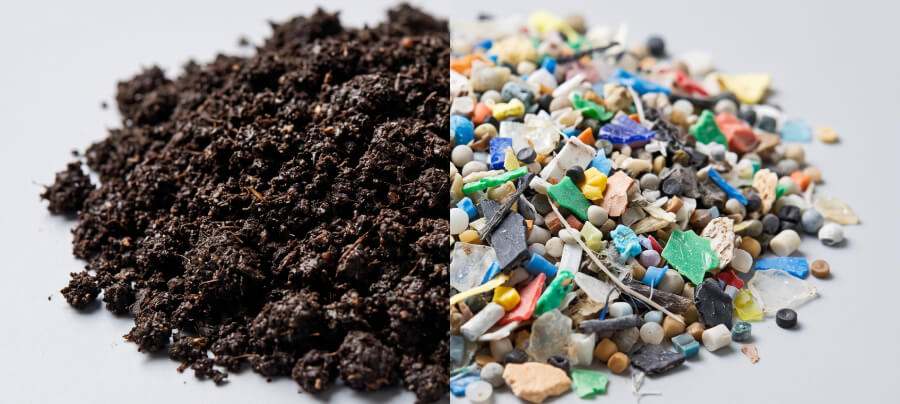
This is exactly where the term gets misused most. Some plastics marketed as biodegradable actually contain oxo-degradation additives.
The breakdown process just fragments the plastic into microplastics too small to see, rather than having microorganisms actually metabolize it. Those fragments can stick around in soil or ocean environments longer than an intact plastic bottle would.
The EU and several U.S. states have restricted “biodegradable” claims on this kind of product in recent years, because the term lacks any specific timeline or environmental requirement. Consumers and buyers looking only at the label have no real way to tell whether a product is genuinely eco-friendly or just creating microplastic pollution through a different route.
Is “Degradable” the Same as “Biodegradable”? Degradable Materials Actually Break Down Through Three Mechanisms
These terms get used interchangeably in the market, but they aren’t strictly equal. Degradable materials generally fall into three categories based on their breakdown mechanism.
The first is biodegradation, the process described above where microorganisms actually metabolize the material. The second is photodegradation, where the material becomes brittle and fragments under UV exposure. The third is oxo-degradation, where additives promote fragmentation when the material is exposed to oxygen and heat.
The word “degradable” on its own doesn’t specify which mechanism applies. When a manufacturer labels something degradable, it might mean true biodegradation, or it might just mean photodegradation or oxo-degradation.
The latter two only turn the material into fragments too small to see; nothing actually disappears. This is exactly why environmental groups keep pushing buyers to look past the label and check which mechanism is actually at work.
What Is “Compostable,” and How Does It Differ From “Biodegradable”?
Compostable is a more clearly defined subcategory of biodegradable, one that has to meet specific conditions set by international standards, covering decomposition time, ecotoxicity testing of any residue, and whether soil quality holds up after the material breaks down. These requirements run from raw material sourcing all the way through final disposal.
Put another way, every compostable material is biodegradable, but the reverse doesn’t hold. A material that’s biodegradable won’t necessarily clear the compostable bar.
Common compostable materials include PLA (polylactic acid) along with plant fiber materials like sugarcane bagasse and bamboo fiber. For more on where these natural fibers come from and their properties, see our earlier piece on What is Sugarcane Bagasse Fiber Pulp?
Can Compostable Packaging Go in a Home Compost Bin?
Not necessarily, and in most cases the answer is no. Compostable materials split into two tiers: industrial compostable and home compostable.
A material like PLA, one of the most common compostable plastics, typically needs an industrial composting facility that can hold temperatures above 58°C (136°F) with stable humidity for weeks before it fully breaks down. A standard home compost bin can rarely maintain those conditions.
Toss this kind of container into a backyard compost bin and the common outcome is that it sits there for months, looking exactly the same as the day it went in. Nothing has actually decomposed.
Why Does PLA Draw So Much Scrutiny, and Why Do Some Regions Restrict It?
PLA is currently the most common compostable plastic, made from renewable feedstock like corn starch, and it does carry compostable certification. On paper, it should be a relatively eco-friendly choice.
The scrutiny it draws isn’t about the material being fraudulent. It comes from the gap between what the certification requires and how the material actually gets used.
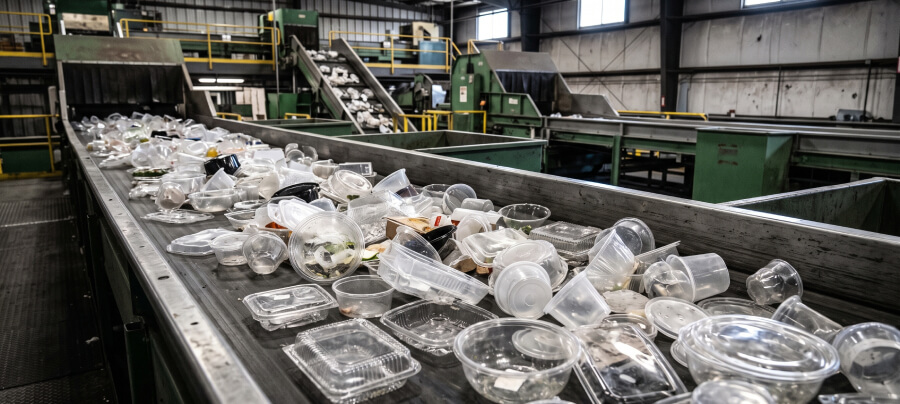
PLA only breaks down under the high heat of an industrial composting facility. Once it ends up in a landfill or the ocean, it decomposes about as slowly as any other plastic. Its appearance is also close enough to PET, a common recyclable plastic, that mixing it into recycling streams causes sorting errors and drags down the quality of the whole batch.
Because of this, regions without widespread industrial composting infrastructure often advise businesses to use PLA carefully, or at minimum to label disposal instructions clearly on the packaging, so customers don’t assume tossing it in regular recycling or a home compost bin will take care of it.
Why Do Some “Compostable” Packages Actually Belong in the Trash in Taiwan?
The real issue here isn’t whether the material works. It’s whether the local area has a matching disposal system. Taiwan’s household food waste collection system is built to handle food scraps, not packaging like PLA that needs industrial composting conditions.
Put it in the food waste bin and it won’t decompose; collection crews are likely to pull it out as contamination and send it to an incinerator anyway.
General recycling runs into a similar problem. Sorting equipment mostly identifies plastic type by appearance and density, and PLA looks close enough to PET that mixing it in raises contamination levels and can get an entire batch rejected, dragging down other plastics that actually were recyclable.
Landfills are largely oxygen-poor environments, and biodegradable material breaks down even more slowly under anaerobic conditions, which just drags out the waste problem it was supposed to solve.
For all these reasons, in areas without industrial composting collection, most environmental agencies recommend putting compostable packaging straight in the regular trash for incineration. That causes the least disruption to the overall waste system.
This matters for buyers shipping to different markets. Most U.S. cities still don’t have widespread industrial composting collection, so even certified compostable packaging typically ends up in regular trash once it reaches the consumer.
Composting infrastructure is more developed in parts of Europe, but it still varies by country and even by city. Certification only answers whether a material can theoretically decompose. What actually happens once it reaches the end user still depends on the local waste system.
The Key Differences at a Glance
The table below breaks down how biodegradable and compostable differ on definition thresholds, decomposition environment, and disposal.
| Comparison | Biodegradable | Compostable |
|---|---|---|
| Definition threshold | No unified international standard; anything that eventually breaks down via microorganisms counts | Clear international standards (e.g. ASTM D6400, EN 13432) governing decomposition time and residue toxicity testing |
| Decomposition environment | Any natural environment with microorganisms, including soil, ocean, and landfill | Specific conditions, usually requiring the heat and humidity of an industrial composting facility |
| Decomposition time | No set requirement; can range from months to decades or centuries | Typically required to decompose within 90 to 180 days |
| Residue after breakdown | May fragment into microplastics that don’t fully disappear | Must pass ecotoxicity testing and leave no harmful residue |
| Common materials | Some conventional plastics with oxo-degradation additives, natural fibers | PLA, sugarcane bagasse, bamboo fiber, and other plant-based materials |
| Recommended disposal | Regular trash in most cases | Industrial composting where available; regular trash otherwise |
Worth noting: plant fiber materials like sugarcane bagasse and bamboo fiber usually satisfy both the biodegradable and compostable definitions, making them one of the few material choices that hold up under either standard.
How to Tell the Difference When You’re Buying: 3 Things to Check
When packaging is labeled “eco-friendly” or “degradable,” checking these three specific items tells you more than reading the adjectives ever will.
Is There an Actual Standard Code Listed?
A product that just says “biodegradable” with no standard code attached is usually relying on marketing language with no third-party verification behind it.
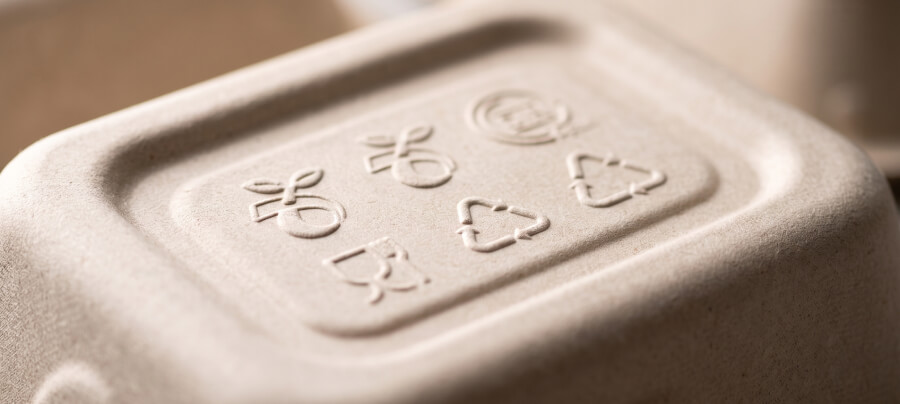
Products that have actually passed compostable certification typically list a specific code like ASTM D6400, EN 13432, BPI, or OK Compost (the OK Compost mark is issued by TÜV Austria).
If a supplier claims a product will break down in a marine environment, check separately for ASTM D6868, the standard that specifically governs marine biodegradability. Not every certification mark applies to every claim. We’ll break down the differences between these standards in more detail in an upcoming piece on plant fiber container compostable certification.
Does It Require Industrial Composting or Home Composting?
Two products can both say “compostable” while one is certified for home composting and the other only works in an industrial facility. The gap between the two is significant, so confirm this before buying rather than assuming the two are interchangeable.
Does Your Region Actually Have a Disposal Path for It?
Even a fully certified product is a dead end if the local area has no industrial composting collection system. This matters especially for buyers evaluating suppliers: put “does the eco-friendly claim come with documentation and a real local disposal path” on your supplier evaluation checklist.
Our piece on evaluating food container suppliers across materials, How Do You Evaluate a Food Container Supplier? 8 Questions That Apply Across Materials, walks through the fuller framework for this kind of due diligence.
Against the backdrop of global efforts to cut plastic use and build a circular economy, “biodegradable,” “degradable,” and “compostable” sound similar, but the mechanisms, conditions, and disposal paths behind them are genuinely different. That’s why two packages can both carry an eco-friendly label while one belongs in an industrial compost stream and the other belongs in the regular trash.
Next time you see one of these labels, start by identifying which decomposition mechanism it’s claiming and whether there’s an actual standard code behind it, then check whether your region has a matching disposal path. That tells you far more than the adjective on the package ever will.