


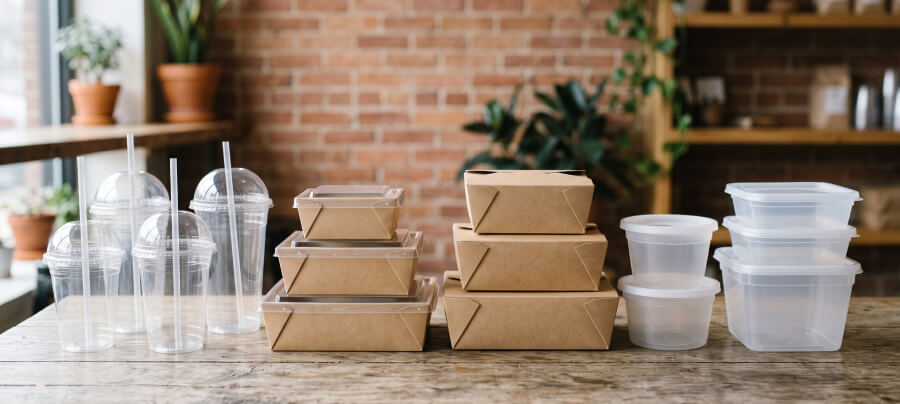
A chain restaurant menu usually spans drinks, cold salads, and hot takeout at the same time, and plastic cups, salad boxes, and takeout boxes each follow different spec logic. Picking specs for each separately often leads to lids that don’t fit the cup body, salad boxes that don’t seal well enough, or takeout boxes that can’t handle the heat, problems that only show up once the order has already shipped to a customer, sometimes as a complaint.
This guide covers the spec details worth checking for cups, salad boxes, and takeout boxes individually, plus the consistency issues that get missed when ordering all three together. The focus here is spec selection itself, not a supplier consolidation strategy, and it’s built for chain restaurant buyers planning menu container specs or confirming multiple specs at once ahead of a new location opening.
Choosing the Right Plastic Cup Spec for Takeout Drinks
A plastic cup’s key specs are material clarity, heat and cold tolerance, and how well the lid seals, three things that directly shape the customer’s experience drinking the order.
What’s the Difference Between Cold and Hot Drink Cup Materials?
Cold drink cups commonly use PET, which stays clear enough to show off the layered look of a hand-shaken drink, while hot drink cups need a heat-tolerant material so the cup body doesn’t soften and warp under a hot beverage. If the menu covers both cold and hot drinks, sourcing separate cup materials for each is worth doing rather than trying to make one cup handle both situations, which tends to produce softening and leak complaints over time.
A double-wall cup is worth considering for hot drinks specifically, since it keeps the outer surface cool enough to hold comfortably without a sleeve, though it does add cost per unit, so it’s worth weighing against how much of the hot drink line actually needs it versus how much can get by with a standard single-wall cup plus a sleeve.
Wall thickness is another spec that gets overlooked easily. A cup with thin walls loses its shape once it’s packed with ice and liquid, and the risk goes up further once it’s been through handling and jostling during delivery. Worth asking the supplier directly for the actual wall thickness number rather than relying on the capacity label alone, two suppliers quoting the same 700 ml cup can have noticeably different wall thickness, which changes both how the cup feels full and how well it holds up.
How Do You Judge Lid Seal Quality?
Lid seal quality isn’t something you can judge by looking at it, in practice the useful test is filling a sample with water and flipping it upside down to check the seam doesn’t leak. It’s also worth confirming the lid and cup body come from the same supplier’s standard mold, since two suppliers’ cup rims can carry the same size label but different actual tolerances, and mixing them tends to produce a lid that never quite seats right. If sourcing the cup body and lid from different suppliers down the line is a possibility, requesting both sides’ tolerance specs to compare beforehand beats discovering they don’t fit once the order has already arrived.
A straw-hole lid deserves its own check too, if the menu includes drinks with large toppings like boba or fruit chunks, a standard straw hole may not be wide enough, and testing with the actual drink and topping combination before committing to a lid spec avoids a redesign after the first batch of complaints comes in.
Salad Box Specs: Getting Clarity, Sealing, and Compartments Right
A salad box is a cold-food container, and its spec priorities differ from a cup’s, clarity affects how the food looks on arrival, and seal quality determines whether sauce leaks in transit.
What Capacity Does a Salad Box Need for a Chain Menu?
Common salad box capacity runs 500 to 1000 ml, and the actual number needed depends on how the menu’s salad portions are built. Worth weighing every salad item on the menu first to establish the real capacity range needed, then matching that against a supplier’s spec options, rather than guessing at a capacity and requesting quotes against a guess.
It’s also worth checking the box’s base shape against the menu’s actual salad builds. A shallow, wide base works better for layered salads meant to show off ingredients through a clear lid, while a deeper, narrower base handles a grain-bowl style item with more volume better without the risk of ingredients spilling over the rim during transit.
Lid style is worth confirming too, a flat lid and a domed lid hold different food heights at the same box footprint, and a heartier salad item can get crushed under a flat lid, making a domed lid the better fit for that item.
How Does Compartment Design Affect Sauce Freshness?
If the menu calls for sauce served separately, a compartmentalized salad box keeps sauce from soaking into greens before delivery, preserving texture by the time it reaches the customer. Compartmentalized boxes typically run a higher unit price than a standard salad box, worth asking for the price difference between compartmented and non-compartmented versions at the inquiry stage, then deciding whether every item needs a compartment or only a few best-selling ones do. If the menu also plans kraft paper items alongside plastic ones, see Kraft Paper Container Selection by Menu Item: Soup Bowls, Salad and Burger Containers, its menu-item-based selection logic applies just as well when planning across materials.
Takeout Box Specs: Balancing Heat Retention and Leak Resistance
A takeout box carries hot food, so its spec priorities are heat range and leak-resistant structure, and getting these two wrong is usually where complaints cluster, a warped box or leaking broth on arrival.
How Do You Confirm a Takeout Box’s Heat Range?
Ask the supplier directly for the actual heat tolerance number at the inquiry stage rather than accepting a vague “heat resistant” claim. If the menu includes freshly wok-fried dishes or soups, it’s worth erring on the conservative side for the heat range, so the box doesn’t start warping by the time it reaches the customer.
What Leak-Resistant Structures Are Common?
Common leak-resistant designs include snap-seal lids, anti-leak tabs, and a raised rim edge, and each structure differs in leak performance and cost, snap-seal lids perform best but also carry the highest unit price. Worth deciding whether to go all-in on snap-seal lids based on how much of the menu is broth-heavy, rather than applying the priciest spec across every item regardless of need.
Vent holes are another detail worth specifying rather than leaving to the supplier’s default, a box with no venting traps steam and softens the food’s texture during the delivery window, while too much venting on a low-liquid item can let heat escape faster than expected. Matching vent placement to the actual moisture level of each dish gets a better result than using the same lid across every takeout item on the menu.
Compartment design in a takeout box shapes the actual eating experience too, if a main and side items need to stay separate, a compartmented box keeps sauces from running together, though the compartments do cut into how much any single section can hold, worth test-packing actual dishes before ordering to confirm portions actually fit rather than judging by total box capacity alone.
What Consistency Matters When Ordering All Three Together?
Choosing specs for plastic cups, salad boxes, and takeout boxes separately isn’t a problem on its own, but ordering all three at once brings up a few consistency points that are easy to miss.
Is the Print Spec for Branding Consistent Across All Three?
If all three containers carry a brand logo, standardizing the color chart and print placement across them is worth doing upfront, so the brand color on a cup doesn’t come out looking different from the brand color on a takeout box. Requesting quotes and placing orders for the three items separately, without centralized management of the print spec, is exactly how this kind of color mismatch shows up. For the supplier-side strategy on solving this through consolidation, see Chain Restaurant Takeout Packaging Consolidation: How One Supplier Can Cover Every Need, which covers the consolidation strategy itself.
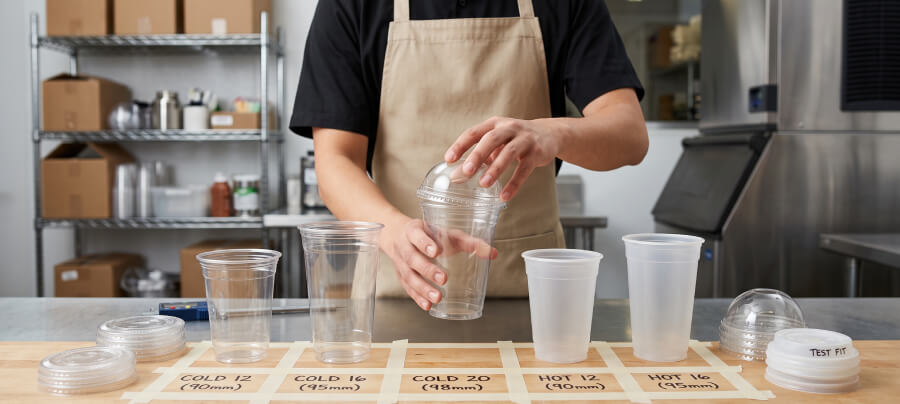
Have You Factored In Stacking and Storage Space Together?
The three containers differ a lot in shape, cups are cylindrical while salad boxes and takeout boxes are rectangular, and storage planning that doesn’t account for how each stacks tends to end up overstocked on one container and short on space for another. Worth asking the supplier for units per case and outer carton dimensions at the inquiry stage, so storage space needs can be calculated ahead of time.
Nesting depth matters for cups specifically, a cup that nests deeply into the one below it saves shelf space but can also make single cups harder to pull apart quickly during a rush, worth testing the actual nesting behavior of a sample stack rather than assuming a deeper nest is always the better choice.
Purchase volume across the three items is worth planning together too. Cup consumption is usually much higher than container consumption, and ordering each separately can mean cups need restocking soon while container stock still sits comfortably full, an inconsistent restock cadence that fragments the ordering schedule. Worth setting a restock cycle for each item based on its actual monthly consumption rather than applying one restock cadence across all three.
How Do You Get Comparable Quotes Once Specs Are Set?
Once the spec sheet is nailed down, the next step is requesting quotes and comparing them. For a first large-volume plastic container order, see Plastic Container Wholesale Buying Guide: How to Get Accurate Quotes and Lead Times Fast, which covers what to ask so the quotes that come back can actually be compared side by side.
Plastic cups, salad boxes, and takeout boxes are three different containers, but they serve the same menu and the same brand image, so spec selection for each shouldn’t happen in isolation. Working out the menu’s actual needs first, portion size, temperature, sauce handling, then confirming spec details for each container against those needs, runs into far fewer mismatches than starting from whatever specs a supplier already has in stock and fitting the menu to them afterward.
For a new location opening where all three container specs need confirming at once, budgeting at least one to two weeks for sampling and test-packing is worth doing, especially for items with compartment designs or custom printing, since those typically take longer to sample than an in-stock spec, and starting too late tends to become a bottleneck in the opening timeline.