



When comparing kraft paper and plastic takeout boxes, most procurement staff start with the quote sheet. Kraft paper usually costs more than comparable PP plastic, and that price gap alone often decides which material wins.
But unit price is only one variable in total cost of ownership, or TCO. Storage space, disposal costs, regulatory compliance risk, and even the hidden value of brand perception all affect what each material actually costs once everything is accounted for. Compare unit price alone, and the final math can point the wrong direction.
If you haven’t yet confirmed whether kraft paper fits your takeout packaging needs overall, our earlier piece, Kraft Paper Takeout Containers Right for Your Restaurant? Heat Limits, ESG Credentials, and Total Cost Compared, lays out the broader material advantages. This article doesn’t repeat that full material comparison, or the three-way comparison against plastic and plant fiber. It focuses on one thing: breaking TCO into specific variables you can calculate yourself, so you can see exactly where kraft paper and plastic differ in cost for your own order volume and storage setup.
Comparing Unit Price Alone Underestimates the Real Cost
The unit price gap between kraft paper and plastic takeout boxes is real. Industry pricing commonly runs 10 to 30 percent higher for kraft paper than comparable PP plastic, and that gap narrows at higher order volumes, though it rarely disappears entirely.
The problem is that this price gap only reflects the cost at the moment of purchase. Once the boxes arrive, they take up warehouse space, and once they’re used, they need to be disposed of. If your market is tightening restrictions on single-use plastic, plastic boxes can also carry a compliance risk cost if you’re forced to switch materials mid-contract. None of this shows up on a quote sheet, but it shows up in your total spend.
What Costs Get Missed Beyond Unit Price
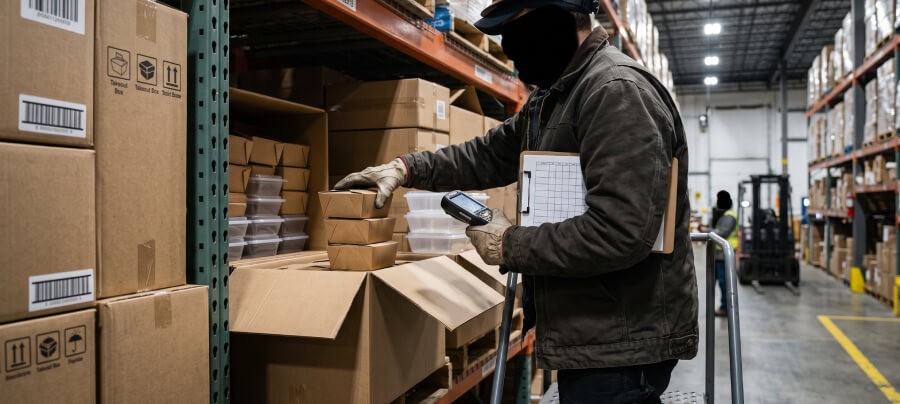
Storage cost is the most commonly overlooked factor. The two materials don’t necessarily stack the same way or fit the same count per carton, and days of warehouse space multiplied by rent adds up to a real difference over time.
Disposal cost depends on how local waste haulers and recycling systems classify and charge for each material. Whether single-use plastic gets classified as requiring extra hauling fees, or kraft paper is easier for local recycling programs to accept, both show up on the disposal end of the ledger.
Compliance risk cost is the easiest to underestimate. If you sign a year’s worth of plastic box orders and local regulators expand single-use plastic restrictions partway through, you may be forced to switch materials early. The contract termination penalty and the time cost of resampling a new material both belong in the purchasing decision, not just the price on today’s quote.
Part of why these costs get missed is that they usually sit in different budget lines. Purchasing tracks unit price, facilities tracks warehouse rent, and compliance or legal tracks regulatory risk, if anyone tracks it at all. None of these teams sees the full picture on their own, which is exactly why a side-by-side TCO calculation is worth doing before signing a long-term contract rather than after.
A TCO Formula: Four Variables to Calculate Separately
Breaking total cost of ownership down for kraft paper versus plastic takeout boxes gives you four variables: unit purchase cost, storage and freight cost, disposal and compliance risk cost, and the hidden value of brand perception. Calculate each one separately, then add them up. That gets you a far more accurate comparison than the quote sheet alone.
Unit Purchase Cost Difference
This one is the most straightforward. Subtract the quotes for both materials at the same spec and order volume. Confirm with your supplier whether the quote already includes freight and duties, common hidden costs in import purchasing, so you’re not comparing quotes on different bases.
The gap narrows at higher volumes mostly because of tooling and press-run economics. A supplier’s setup cost for a print run or mold gets spread across more units as order size grows, so the per-unit premium on kraft paper shrinks the larger the order gets. If your order volume sits near a supplier’s pricing tier breakpoint, it’s worth asking directly where that breakpoint falls. Ordering slightly above it can close more of the price gap than the raw percentage difference suggests.
Storage and Freight Cost
Storage cost works out to box volume per carton multiplied by days in storage multiplied by warehouse rent per unit. Kraft paper and plastic boxes don’t necessarily match on carton count or stacking height limits, so before placing an order, it’s worth asking your supplier for actual carton spec sheets and running the numbers yourself rather than assuming both materials store the same way.
Freight cost comes down to container loading efficiency. How many boxes fit in the same container directly affects the freight cost per unit, so this is another figure worth getting actual loading data on from your supplier rather than estimating from material weight alone. Two suppliers quoting the same box spec can still pack a container differently depending on how they nest or flat-pack the cartons, so the loading count on paper doesn’t always match what actually ships.
Disposal and Compliance Risk Cost
Disposal cost works out to order volume per cycle multiplied by the disposal fee per unit. That fee depends on how local waste systems classify takeout packaging, so it’s worth asking directly about the disposal fee structure in your specific market rather than applying rates from somewhere else. A distributor selling into several states or countries at once should expect this fee to vary by jurisdiction, sometimes significantly, which is one more reason a single blended estimate rarely holds up across an entire customer base.
Compliance risk cost is harder to put into a fixed formula. The more practical approach is to check, for the length of your purchasing contract, whether your market has already announced or is planning single-use plastic or food packaging restrictions, such as Taiwan’s expanded plastic restrictions starting in 2026 or the EU’s Packaging and Packaging Waste Regulation, which starts applying to food-contact packaging on August 12, 2026 and adds a recyclability grading system on top of existing material restrictions. Take a conservative estimate of the contract termination penalty and the resampling time cost, and build that into your risk assessment before signing, rather than discovering mid-contract that your material is about to be restricted.
For buyers shipping into multiple markets, this risk compounds. A material that’s still compliant in one country can fall under new restrictions in another partway through the same contract term, so it’s worth checking compliance status market by market rather than assuming one region’s rules apply everywhere you sell.
The Hidden Value of Brand Perception
This variable is the hardest to quantify and the easiest to overstate. Kraft paper generally carries a more positive eco-friendly perception with consumers than plastic, but whether that perception actually translates into more orders or a higher price point per customer varies by industry and audience, with no universal conversion rate. A fast-casual chain marketing itself on sustainability may see a real return on that perception. A wholesale distributor supplying packaging to other businesses may see almost none, since the end consumer never sees the invoice. Treat this as a qualitative plus rather than a specific dollar figure. Assigning it a made-up number would throw off the whole TCO calculation.
A Worked Example: What Order Volume Makes Kraft Paper’s Total Cost Lower
The breakeven order volume is the point where kraft paper’s storage and disposal savings add up to exactly offset the unit price gap. Plugging unit purchase cost and storage cost into a hypothetical scenario shows roughly how that math works.
Say plastic boxes cost $0.06 less per unit than kraft paper, but kraft paper’s better stacking efficiency means each carton takes up 10 percent less warehouse space. Start by pricing out the warehouse rent per cubic foot per month at your facility, then work out how much rent a 10 percent smaller footprint saves per carton over the time those boxes typically sit in storage before use. Multiply that saved rent across a batch of 10,000 units, and compare it against the $0.06 per unit price gap times 10,000. Once the storage savings catch up to and pass the price gap, you’ve found your breakeven order volume.
The real numbers vary by supplier and by warehouse setup. What matters here is the calculation method, not a universal conclusion. When you actually run this, plug in your own unit price gap, storage efficiency difference, and disposal cost rate into the same logic, and you’ll get the breakeven volume for your own purchasing situation rather than borrowing someone else’s answer.
When Kraft Paper Wins on TCO, and When Plastic Still Makes Sense
For buyers placing long-term, high-volume orders in a market where plastic restrictions are clearly tightening, kraft paper’s compliance risk savings and brand perception upside tend to work in its favor. It’s worth putting the weight of your TCO calculation on the storage and compliance variables in that case.
For short-term or small test orders, or in markets where the waste disposal system is relatively plastic-friendly, plastic’s lower unit price advantage usually still holds up. In that case, it’s more efficient to put the weight of your TCO calculation back on unit purchase cost and freight.
A chain restaurant signing a multi-year supply contract and a startup brand placing a one-time trial order are running two different calculations, even if they’re buying the same box. The chain has more to gain from getting the storage and compliance variables right, since those costs compound across years of repeat orders. The startup is usually better off keeping the math simple and revisiting TCO once order volume and storage needs become clearer.
If you’re weighing more than kraft paper and plastic, say plant fiber as a third material, we’ll have more articles covering that soon. If you still need to settle on which plastic resin fits your cost structure and use case, see Food-Grade Plastic Containers: A Complete Buying Guide to PP, PET, and PS.
Choosing between kraft paper and plastic takeout boxes ultimately isn’t about which unit price is lower. It’s about which material costs less once you account for storage, disposal, and compliance risk, the variables that are easy to miss. Running this TCO formula against your actual order volume and storage setup will tell you far more than comparing quote sheets side by side.