


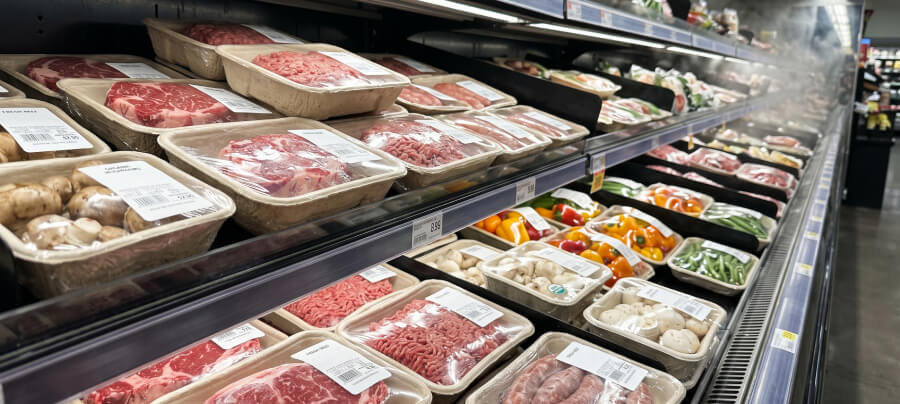
Supermarkets and hypermarkets have been switching foam display trays to plant fiber in their fresh produce sections. At first glance this looks like the same move as switching to plant fiber takeout containers, but display trays face a completely different situation. A takeout box holds food that’s already prepared and usually eaten within hours. A display tray holds raw meat or produce that needs to sit in a refrigerated case for days and work with existing equipment like overwrap film machines.
If you haven’t decided whether to switch from plastic to plant fiber at all, our earlier piece, Plant Fiber Containers vs Kraft Paper Containers: Which One Fits Your Procurement Needs?, covers the broader material comparison. Most existing content on plant fiber containers is still written around takeout boxes, and there’s very little that actually addresses the supermarket display tray use case. This guide focuses on what makes display trays different from takeout containers, so buyers evaluating this switch know what to actually check.
What Sets Plant Fiber Trays Apart From Ordinary Plant Fiber Containers
A takeout container solves “how do I get this meal safely to the customer.” A display tray solves “how does this raw product hold up in a refrigerated case for days and still look good on the shelf.” Those are different environmental pressures, so the spec priorities differ too.
Drip Loss and Extended Display Time
Raw meat and seafood continuously release blood or tissue fluid while on display, so the tray base needs some level of absorption or drainage design to keep that fluid from pooling inside the package and ruining the product’s appearance. Takeout containers never have to deal with this, since a meal is usually eaten within hours of being boxed.
Produce has a lighter drip issue but sits on display much longer. A tray’s breathability and moisture resistance directly affect how long produce stays fresh. Get the material wrong, and produce ends up soft and waterlogged early, which just adds to the supermarket’s shrinkage cost.
Compatibility With Overwrap Film Machines: A Technical Bar Takeout Containers Never Face
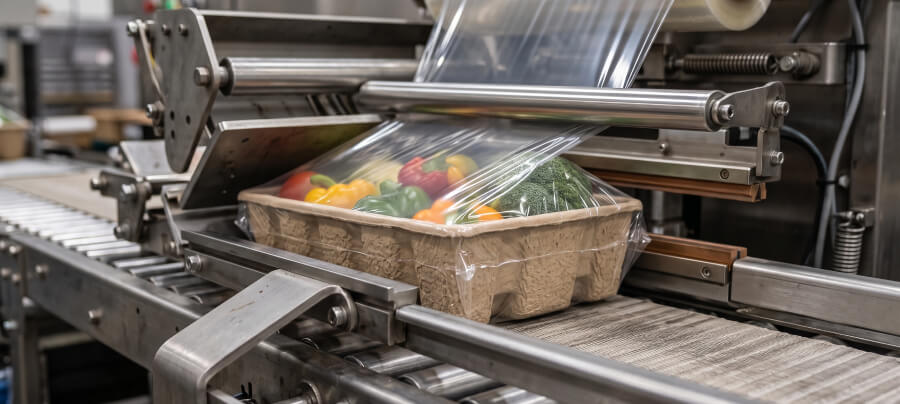
Supermarket fresh produce packaging usually runs through an automatic or semi-automatic overwrap machine that wraps film tightly around the tray and product. That process has real tolerance requirements for the tray’s shape and edge strength. If the tray edge deforms or chips easily, the overwrap machine tends to jam or fail to seal properly, something a takeout container supplier never specifically tests for.
Before ordering, it’s worth confirming directly with the supplier whether the plant fiber tray has actually been tested on an overwrap machine, rather than relying on heat and oil resistance data alone. Meeting material specs doesn’t mean it’s compatible with your existing packaging equipment. Those are two separate things to verify.
Machine settings matter here too, not just the tray itself. Overwrap machines are typically tuned for the flex and rigidity of foam or plastic trays, and a plant fiber tray’s stiffness can behave differently under the same seal pressure and temperature settings. It’s worth asking the supplier or equipment vendor whether the machine needs recalibrating for the new material, rather than assuming existing settings will transfer over without adjustment.
The Actual Adoption Process for Plant Fiber Trays in Supermarket Fresh Produce Sections
Switching from foam or plastic trays to plant fiber isn’t something to do across every category at once. The more practical approach is to pilot one category first, confirm how it performs once it’s actually on the shelf, and then expand from there.
Which Category to Pilot First: Produce, Meat, or Deli
Produce is usually the best category to pilot. Drip loss is lighter, and the display environment is relatively simple, so the risk of something going wrong is lower than with meat. It’s a good way to validate overwrap machine compatibility and gauge customer reception. Once produce is running smoothly, expand into meat and seafood, which carry higher drip and moisture demands, rather than starting with the most demanding category first.
During the pilot, it’s worth picking a fixed set of stores and observing actual shelf performance for at least one to two weeks, not just a single day. Issues like drip pooling or deformation often only show up after several consecutive days of real use.
Store staff feedback is worth collecting during the pilot too, not just the shelf-level results. The people actually loading trays into the overwrap machine and restocking the case day to day will notice handling issues, like trays jamming more often or taking longer to wrap, well before those issues show up in a formal review.
What to Confirm With Suppliers and What to Sample-Test Before Adopting
Beyond basic heat, oil, and water resistance testing, it’s worth adding an actual overwrap machine run to the sample test, running the sample tray through the store’s existing wrapping equipment to confirm edge strength and dimensional tolerance meet the equipment’s requirements. It’s also worth loading actual target-category product into the sample and leaving it in a refrigerated case for the same number of days it would actually sit on display, observing drip, deformation, and odor, rather than relying only on the supplier’s lab test report.
It’s worth requesting a batch of samples rather than just one or two units too, since molded plant fiber can show more batch-to-batch variation in thickness and rigidity than injection-molded plastic. Testing a single sample and assuming every unit from a production run behaves the same way risks missing that variation until it shows up as inconsistent performance on the actual shelf.
Material Details to Watch for Meat, Produce, and Deli Trays
The three common categories in a supermarket fresh produce section each put different demands on tray material, worth confirming separately rather than applying one spec across every category.
Raw Meat: Drip Control and Hygiene
Meat has the highest bar for drip handling. Whether the tray base has adequate absorption or drainage directly affects hygiene in the display case and how the product looks. It’s also worth confirming with the supplier whether the tray material carries any antibacterial or hygiene certification, since food safety risk runs comparatively high for meat. Ground meat and marinated cuts tend to release more liquid than whole cuts, so it’s worth testing absorption performance against the specific products a store actually carries rather than assuming one tray design covers the full meat case.
Produce: Breathability and Moisture
Produce actually needs a certain level of breathability. A tray material that’s too sealed traps moisture inside the package and speeds up spoilage. When selecting material, it’s worth confirming actual breathability performance with the supplier rather than looking only at water resistance data. Too much water resistance can work against produce freshness.
Leafy greens and soft fruit tend to be the most sensitive to trapped moisture, so if those make up a meaningful share of the produce section, it’s worth running the pilot on that specific product mix rather than testing only on hardier items like root vegetables, which hold up fine under almost any tray material and won’t reveal a breathability problem.
Deli: Heat Resistance and Grease Resistance
Deli items, ready-to-eat salads or braised dishes, for example, may involve warming or heated display, so the tray needs to meet heat and grease resistance requirements. Deli Section Packaging Solutions for Supermarkets and Hypermarkets: Kraft Paper Container Applications covers the practical case logic here, and plant fiber trays face a similar set of considerations.
Supplier and Cost Questions to Confirm Before Buying Plant Fiber Trays
Beyond material specs, a supplier’s production capacity stability and ability to produce custom tray sizes for display purposes are also worth confirming before adopting, especially for a chain with many stores and high volume. If a supplier can’t supply consistently, it directly affects in-store display operations.
The same cross-material evaluation logic applies when assessing suppliers here. How Do You Evaluate a Food Container Supplier? 8 Questions That Apply Across Materials covers the framework, and it’s worth adding the category-specific needs here, overwrap machine compatibility and custom tray sizing, to that existing checklist.
On cost, plant fiber trays typically carry a higher unit price than foam or plastic, but whether that actually pencils out depends on factors like compliance risk from plastic restrictions and the brand image upside, not just the sticker price. We’ll have a dedicated piece covering the cost-benefit analysis for hypermarkets adopting plant fiber containers soon.
The real challenge in switching supermarket fresh produce sections to plant fiber trays isn’t whether the material is eco-friendly. It’s the technical details display trays have to handle, drip control, overwrap machine compatibility, and category-specific differences, none of which plant fiber takeout containers ever have to deal with. Piloting a single category first, running it through overwrap testing and display-duration testing, then expanding from there gives far more control over the rollout than switching everything at once, and it catches equipment and handling issues while the exposure is still limited to a handful of stores rather than the entire chain.